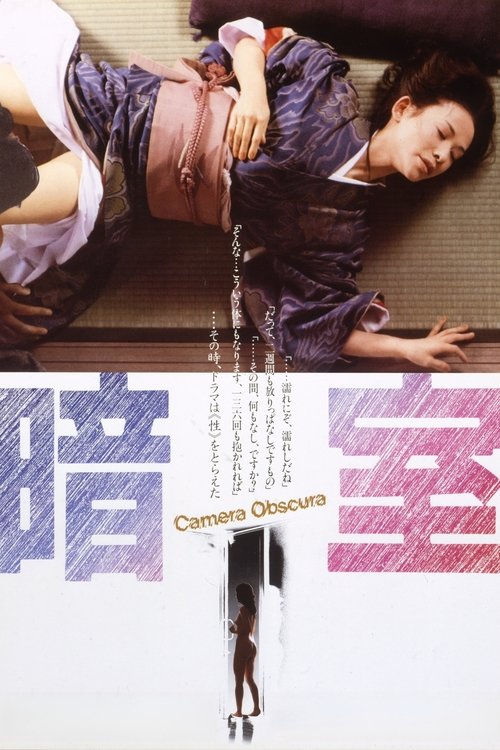
Dark Room 1983
Kirio Urayama's *Dark Room (1983)* crafts a melancholic tale of grief and suspicion, where a grieving writer channels his pain into fiction while spiraling into paranoia over his lovers' perceived betrayals.
Director: Kirio Urayama
Cast

Kōji Shimizu
Nakata - Author(中田)
Rie Kimura
Natsue(夏枝)
Mayumi Miura
Takako(多加子)

Yoshimi Ashikawa
Maki(マキ)

Yuki Kazamatsuri
Keiko - Author's Wife(圭子)
Eimei Esumi
Takei(竹井)
Sachiko Take
Yumiko(由美子)

Usagi Asō
Tae(タエ)

Kazuyo Ezaki
The Woman in Home drama(ホームドラマの女)

Kaori Okamoto
Ryôko(良子)
Frequently Asked Questions
What is Dark Room (1983) about?
*Dark Room* follows a grieving writer whose wife's death leaves him emotionally adrift. Haunted by paranoia and the fear of infidelity, he uses his affairs as fodder for his novels, blurring the line between reality and fiction. As his relationships unravel, he becomes trapped in a cycle of suspicion that mirrors his fictional creations.
Who directed Dark Room?
The film was directed by Kirio Urayama, a Japanese filmmaker known for his introspective dramas that explore human psychology and societal pressures.
Who stars in Dark Room?
The lead roles are played by Kōji Shimizu, Rie Kimura, and Mayumi Miura, with standout performances by Yoshimi Ashikawa and Yuki Kazamatsuri.
Is Dark Room (1983) worth watching?
For fans of slow-burn dramas with psychological depth, *Dark Room* is a rewarding experience. Its themes of grief and obsession resonate through its moody cinematography and restrained performances, though its pacing may test those seeking faster-paced narratives. As an unrated 1980s Japanese drama, it offers a unique window into the era's storytelling sensibilities.
How long is Dark Room?
The runtime is 122 minutes, or just over two hours.
About Dark Room (1983) — A Heartbreaking Tale of Love, Loss, and Literary Obsession
Kirio Urayama's *Dark Room (1983)* crafts a melancholic tale of grief and suspicion, where a grieving writer channels his pain into fiction while spiraling into paranoia over his lovers' perceived betrayals. The film's moody atmosphere lingers in dimly lit spaces, mirroring the protagonist's fractured psyche as he transforms personal heartbreak into raw material for his novels. As shadows deepen both literally and emotionally, the story explores the blurred lines between art and obsession, where love and loss become indistinguishable. With a score that hums with quiet intensity and performances that ache with restraint, *Dark Room* is a atmospheric dive into the mind of a man who sees ghosts in every glance and motives in every silence.
Steeped in the quiet desperation of a 1980s Japanese drama, the film contrasts the sterile precision of urban life with the messy chaos of human emotion. The writer's descent into solipsism is as gripping as it is unsettling, making *Dark Room* a haunting meditation on how we romanticize—and weaponize—our deepest wounds. For those who crave films that linger like an unsolved mystery, this is a story that refuses to let go.