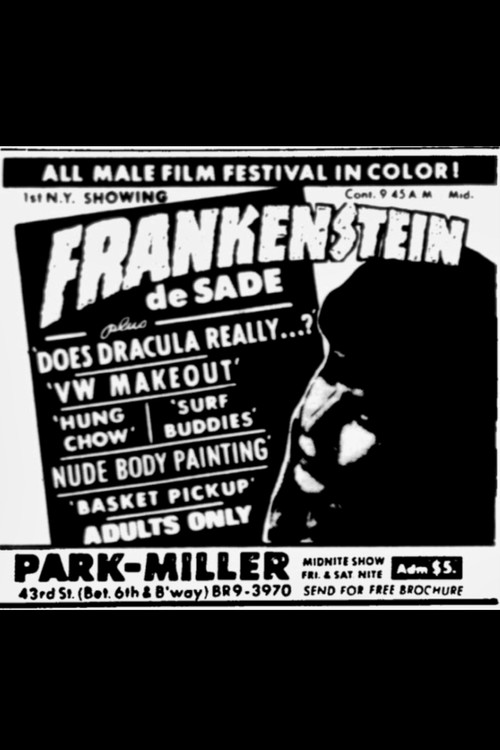
Frankenstein de Sade 1969
Frankenstein de Sade (1969) delivers a twisted fusion of classic horror and Gothic decadence, where Dr. Frankenstein's scientific ambition collides with the darkly erotic philosophies of the Marquis de Sade.
Frequently Asked Questions
What is Frankenstein de Sade (1969) about?
This 1969 horror film reimagines Mary Shelley's classic tale through a decadent, Marquis de Sade-inspired lens. Dr. Frankenstein and his hunchbacked assistant attempt to create life, but their experiment yields a being whose existence blurs the line between abomination and tragic humanity.
Who directed Frankenstein de Sade?
Director information is not available.
Who stars in Frankenstein de Sade?
The film's cast is not officially documented, though it features actors who specialized in horror and exploitation cinema of the era.
Is Frankenstein de Sade (1969) worth watching?
As an obscure cult film, Frankenstein de Sade offers a niche appeal to horror fans seeking something different. Its blend of Gothic atmosphere and taboo themes makes it intriguing, though its lack of mainstream recognition may limit its broad appeal.
How long is Frankenstein de Sade?
Runtime details are not listed.
About Frankenstein de Sade (1969) — A Gothic Horror Fable of Creation and Corruption
Frankenstein de Sade (1969) delivers a twisted fusion of classic horror and Gothic decadence, where Dr. Frankenstein's scientific ambition collides with the darkly erotic philosophies of the Marquis de Sade. In this atmospheric reimagining, the doctor and his hunchbacked assistant push the boundaries of creation, stitching together a monstrous being whose physical and psychological complexity defies convention. The film drips with eerie tension, blending the macabre with a sense of twisted liberation that lingers long after the credits roll.
Beneath its horror veneer, Frankenstein de Sade explores themes of control, morality, and the limits of human curiosity. The monster isn't just a brute—he's a symbol of repressed desires and societal taboos, framed against a backdrop of decaying castles and shadowy laboratories. With its unique blend of exploitation-style shocks and philosophical undertones, this cult gem stands out in the annals of late-'60s cinema as a provocative, if obscure, entry into the Frankenstein mythos.