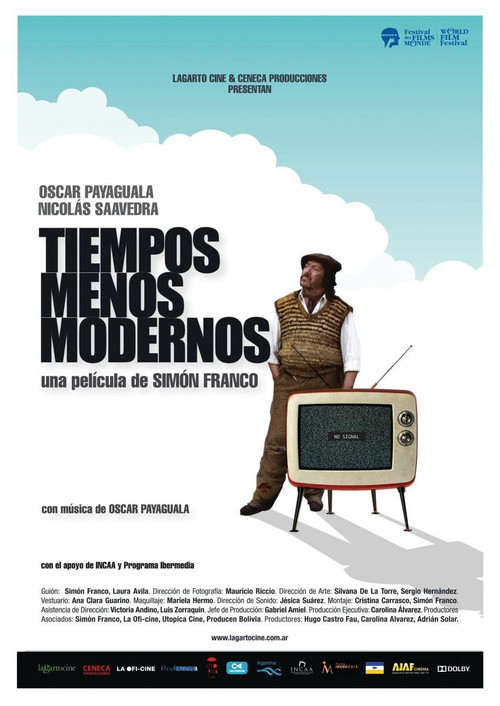
Tiempos menos modernos 2012
In the wide-open solitude of Patagonia, *Tiempos menos modernos (2012)* immerses viewers in the quiet endurance of Oscar Payaguala, a gaucho who tends his flock in near-isolation.
Director: Simón Franco
Cast


Frequently Asked Questions
What is *Tiempos menos modernos (2012)* about?
The film follows Oscar Payaguala, a gaucho living in the remote Patagonia, who receives an unopened box that disrupts his solitary routine. His refusal to accept the delivery hints at deeper emotional resistance or unresolved tension.
Who directed *Tiempos menos modernos*?
The film was directed by Simón Franco, a filmmaker known for capturing raw, atmospheric storytelling rooted in regional landscapes.
Who stars in *Tiempos menos modernos*?
The cast includes Nicolás Saavedra, Oscar Payaguala, Alexia Moyano, and Ricardo Fernández in pivotal roles.
Is *Tiempos menos modernos (2012)* worth watching?
While IMDb ratings are unlisted, its contemplative drama and striking Patagonian setting make it a compelling watch for fans of slow-burn narratives and character-driven stories.
How long is *Tiempos menos modernos*?
The film runs for 95 minutes.
About Tiempos menos modernos (2012) — A Patagonian Drama of Solitude and Mystery
In the wide-open solitude of Patagonia, *Tiempos menos modernos (2012)* immerses viewers in the quiet endurance of Oscar Payaguala, a gaucho who tends his flock in near-isolation.
Director Simón Franco crafts a stark, contemplative drama where time seems to slow to the rhythm of the land. As a cryptic delivery arrives by plane and van, the mystery deepens: what lies inside the box Payaguala refuses to open? The film unfolds with deliberate pacing, blending themes of solitude, tradition, and the unspoken weight of the past. With a minimalist visual palette and naturalistic performances, it invites reflection on what we carry—and what we leave behind.