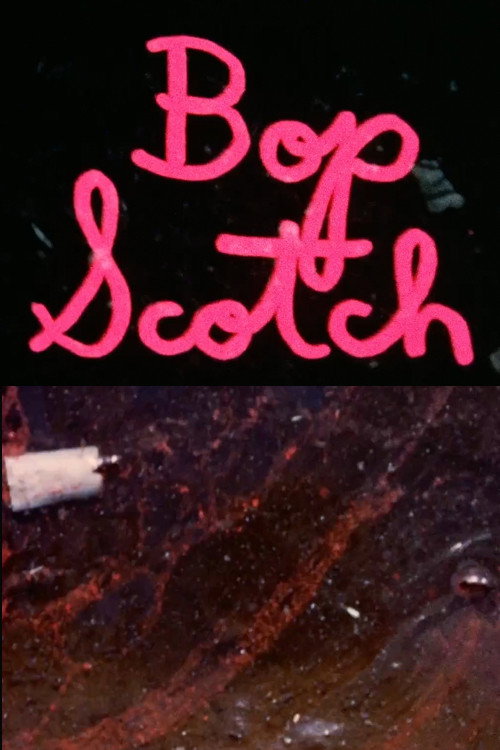
Bop Scotch 1952
Step into the hypnotic visual language of Jordan Belson's *Bop Scotch (1952)*, a fleeting three-minute experiment in motion and color that predates the avant-garde master's later cosmic visions.
Director: Jordan Belson
Frequently Asked Questions
What is Bop Scotch (1952) about?
*Bop Scotch* transforms ordinary pavement into a living, breathing canvas of light and motion. Instead of telling a story, the film uses the rhythmic shifting of cracks and textures to create a hypnotic visual symphony. It's an abstract journey where the everyday becomes extraordinary through the lens of experimental animation.
Who directed Bop Scotch?
Bop Scotch was directed by Jordan Belson, a pioneering American filmmaker and abstract animator who later became a central figure in the San Francisco Renaissance movement.
Who stars in Bop Scotch?
Cast details for *Bop Scotch (1952)* are not listed, as the film is an experimental visual work rather than a traditional narrative production.
Is Bop Scotch (1952) worth watching?
While *Bop Scotch* is unrated and obscure by mainstream standards, its historical significance in experimental film and Belson's later acclaim make it a compelling watch for fans of avant-garde cinema. At just three minutes long, it offers a rare window into the origins of a visionary artist's style—though it won't appeal to those seeking traditional storytelling.
How long is Bop Scotch?
Bop Scotch has a runtime of 3 minutes.
About Bop Scotch (1952) — Discover the Avant-Garde Short That Inspired a Visual Revolution
Step into the hypnotic visual language of Jordan Belson's *Bop Scotch (1952)*, a fleeting three-minute experiment in motion and color that predates the avant-garde master's later cosmic visions. In this early experiment, Belson didn't rely on digital effects or intricate animation—instead, he brought everyday textures to life, animating pavement cracks and sidewalks as rhythmically pulsing patterns that dance across the screen. The film's stripped-down approach and bold geometric interplay foreshadowed Belson's lifelong fascination with mysticism and abstraction, offering a raw yet poetic glimpse into the origins of his distinctive style. While Belson later withdrew this work, calling it 'imperfect,' its spontaneity and chromatic intensity still captivate viewers drawn to experimental filmmaking.
*Bop Scotch (1952)* is less a narrative experience than a sensory meditation, where the mundane becomes magical through the lens of Belson's singular vision. The short's hypnotic syncopation of light and texture invites repeated viewings, revealing layers of rhythm and depth beneath its surface simplicity. Though modest in scale, it stands as a fascinating artifact of mid-century experimental cinema—a quiet rebellion against convention that rewards those willing to pause and look closer.