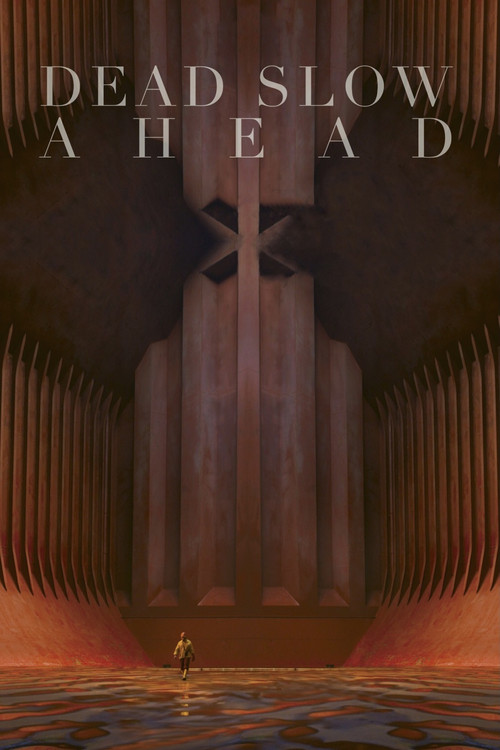
Dead Slow Ahead 2016
Dive into the hauntingly rhythmic world of *Dead Slow Ahead* (2016), Mauro Herce's hypnotic documentary that turns a colossal freighter into a stage for the vanishing art of seafaring.
Director: Mauro Herce
Frequently Asked Questions
What is Dead Slow Ahead (2016) about?
*Dead Slow Ahead* (2016) follows a massive freighter as it cuts through the ocean, using its hypnotic machinery to explore the erosion of traditional seafaring life under the weight of modern capitalism. The film contrasts the dying artistry of manual labor with the unstoppable, impersonal force of 21st-century industry.
Who directed Dead Slow Ahead?
Dead Slow Ahead was directed by Mauro Herce, a filmmaker known for his evocative visual storytelling and immersive documentaries.
Who stars in Dead Slow Ahead?
Cast details for *Dead Slow Ahead* (2016) are not listed, but the film centers on the anonymous crew of the freighter, whose labor forms the heart of the narrative.
Is Dead Slow Ahead (2016) worth watching?
With its meditative pace and striking cinematography, *Dead Slow Ahead* (2016) is a standout documentary for fans of slow-burn filmmaking and industrial themes. While it may not appeal to those seeking fast-paced action, its atmospheric depth and thematic boldness make it a unique cinematic experience.
How long is Dead Slow Ahead?
*Dead Slow Ahead* (2016) runs for 74 minutes.
🎥 Trailer
About Dead Slow Ahead (2016) — A Haunting Voyage into Industrial Obsolescence
Dive into the hauntingly rhythmic world of *Dead Slow Ahead* (2016), Mauro Herce's hypnotic documentary that turns a colossal freighter into a stage for the vanishing art of seafaring. Shot with a painterly eye for industrial decay, the film transforms the ship's roaring engines into a metaphor for the relentless march of modern capitalism, where human labor is swallowed by cold, mechanical precision. As the gears churn without respite, the crew's gestures become relics of a fading era, their rhythms lost in the ceaseless, impersonal pulse of the 21st century.
The documentary lingers on the stark beauty of the vessel—its labyrinthine interiors, the eerie glow of machinery, and the silent toil of its workers—as it cuts through the ocean's vast expanse. Herce's lens captures not just a journey, but a meditation on obsolescence, where the ship itself feels like a ghost vessel, drifting between past and future. The result is a meditative, almost surreal experience that lingers long after the engines fall silent.