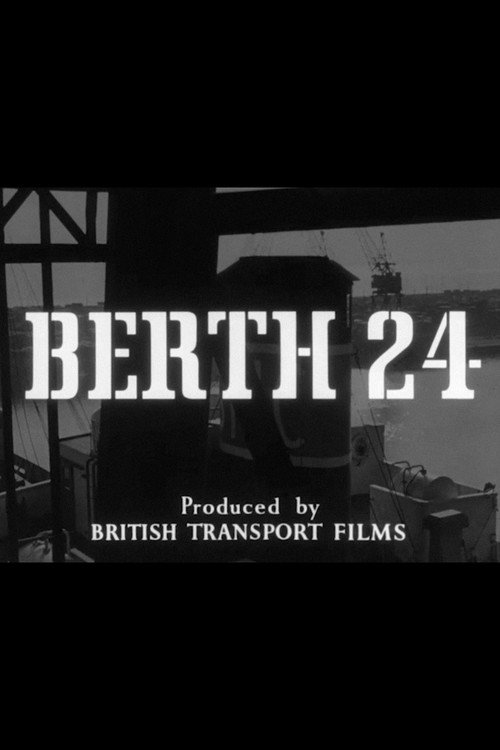
Berth 24 1950
Berth 24 (1950) offers a fascinating snapshot of post-war maritime life, capturing the routine yet industrious arrival of the S.S. Bravo at Hull Docks from Gothenburg. Directed by J.B.
Director: J.B. Holmes
Cast
Frequently Asked Questions
What is Berth 24 (1950) about?
Berth 24 (1950) documents the arrival of the S.S. Bravo at Hull Docks, carrying cargo from Gothenburg. This short documentary captures the bustling activity of a post-war port, where dockworkers, machinery, and logistics converge to keep trade flowing. It's a snapshot of industrial life rarely seen on film.
Who directed Berth 24?
Berth 24 was directed by J.B. Holmes, a filmmaker known for his work in documentary cinema during the mid-20th century.
Who stars in Berth 24?
William Devlin and Richard Huson are the primary figures featured in Berth 24 (1950), playing roles integral to the dockyard operations.
Is Berth 24 (1950) worth watching?
While Berth 24 (1950) is unrated on IMDb, its historical and industrial value makes it a compelling watch for fans of documentary films. Its authentic portrayal of post-war maritime life offers a unique perspective on the era's infrastructure, though it may lack the narrative drive of fictional works.
How long is Berth 24?
Berth 24 (1950) has a runtime of 40 minutes.
About Berth 24 (1950) — A Glimpse into Post-War Dockyard Life
Berth 24 (1950) offers a fascinating snapshot of post-war maritime life, capturing the routine yet industrious arrival of the S.S. Bravo at Hull Docks from Gothenburg. Directed by J.B. Holmes, this documentary transports viewers to the heart of 1950s dockyard operations, where cranes sway, cargo shifts, and the rhythm of commerce pulses through every frame. The film immerses audiences in the gritty realism of port labor, highlighting the unsung heroes who keep global trade humming. With its black-and-white aesthetic and unflinching focus on machinery and manpower, Berth 24 (1950) transforms a seemingly mundane docking procedure into a compelling meditation on industry, endurance, and the human touch behind every transaction.
William Devlin and Richard Huson lend their expertise to this behind-the-scenes exploration, grounding the documentary in authenticity. As a genre piece, it stands apart for its unadorned portrayal of logistics, offering a rare glimpse into the infrastructure that powers economies. The atmosphere is one of quiet determination, where every bolt tightened and every crate hoisted tells a story of resilience and routine in a world rebuilding itself.