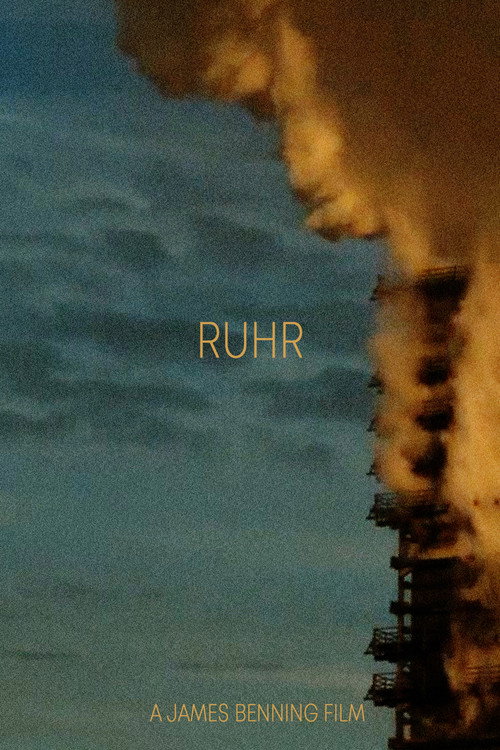
Ruhr 2009
James Benning's *Ruhr (2009)* offers a meditative exploration of time and place through seven deliberate, unchanging long takes filmed in Germany's Ruhr Valley.
Director: James Benning
Frequently Asked Questions
What is Ruhr (2009) about?
James Benning's documentary captures the Ruhr Valley through seven static shots, transforming industrial landscapes and natural spaces into a meditative study of time and existence. The film's unhurried pace strips away distractions, focusing on the subtle details that define the region's history and identity.
Who directed Ruhr?
Ruhr (2009) was directed by James Benning, a filmmaker celebrated for his contemplative documentaries that explore landscape and memory.
Who stars in Ruhr?
Director information is not available.
Is Ruhr (2009) worth watching?
As an unrated documentary, *Ruhr (2009)* may not appeal to those seeking fast-paced narratives, but its patient, immersive approach rewards viewers drawn to slow cinema and thematic depth. Benning's work is best experienced by those who appreciate meditative filmmaking and landscapes as storytelling devices.
How long is Ruhr?
Ruhr (2009) has a runtime of 122 minutes.
About Ruhr (2009) — A Slow Cinema Masterpiece in the Ruhr Valley
James Benning's *Ruhr (2009)* offers a meditative exploration of time and place through seven deliberate, unchanging long takes filmed in Germany's Ruhr Valley. The documentary strips away movement to reveal the quiet beauty and industrial weight of a landscape shaped by history, labor, and nature's slow persistence. Shot with precise stillness, each frame invites viewers to notice the subtle shifts in light, the passage of clouds, and the echoes of human activity in a region once defined by its steel mills and coal mines. Benning's approach turns the mundane into the profound, crafting a visual poem that lingers on the textures of existence.
Pacing is the film's most striking feature—122 minutes unfold with deliberate slowness, challenging modern audiences to savor stillness in an era of constant motion. The Ruhr Valley, with its layered history and post-industrial melancholy, becomes a character itself, a backdrop for reflection on progress, decay, and the impermanence of human endeavor. Whether you're drawn to documentaries for their storytelling or their atmospheres, *Ruhr (2009)* delivers an experience as thought-provoking as it is visually arresting.