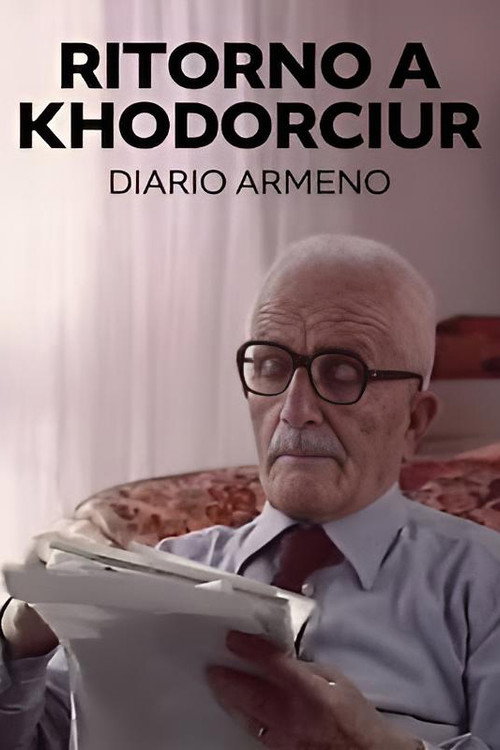
Return to Khodorciur—Armenian Diary 1986
In *Return to Khodorciur—Armenian Diary* (1986), Yervant Gianikian crafts a deeply personal documentary that blends history and memory through intimate storytelling.
Director: Yervant Gianikian
Cast
Frequently Asked Questions
What is *Return to Khodorciur—Armenian Diary* (1986) about?
This documentary follows Raphael Gianikian, a survivor of the 1915 Armenian Genocide, as he shares his harrowing memories in Venice decades later. His son, Yervant Gianikian, captures the intimate moment as Raphael reads from his memoirs, blending personal history with the weight of collective trauma.
Who directed *Return to Khodorciur—Armenian Diary*?
The film was directed by Yervant Gianikian, who frames his father's testimony with a filmmaker's sensitivity and a historian's precision.
Who stars in *Return to Khodorciur—Armenian Diary*?
The film stars Raphael Gianikian, who shares his story, and is directed by Yervant Gianikian.
Is *Return to Khodorciur—Armenian Diary* (1986) worth watching?
For those drawn to documentary films that explore historical memory and personal resilience, this 75-minute gem offers a profound experience. While not widely rated, its unique approach to storytelling makes it a compelling watch for history enthusiasts and fans of intimate cinema.
How long is *Return to Khodorciur—Armenian Diary*?
The film runs for 75 minutes.
About Return to Khodorciur—Armenian Diary (1986): A Father's Voice from the Past
In *Return to Khodorciur—Armenian Diary* (1986), Yervant Gianikian crafts a deeply personal documentary that blends history and memory through intimate storytelling. The film centers on Raphael Gianikian, the director's father, who survived the harrowing Armenian Genocide of 1915 in Eastern Turkey. Decades later, in Venice's quiet streets, Raphael revisits his past, reading from his memoirs in Armenian as his son documents the moment. The 75-minute runtime unfolds like a fragile heirloom, where history is not just recalled but re-experienced through the cadence of a voice and the weight of unspoken trauma.
Gianikian's work transcends typical historical documentation, weaving together the personal and the political. The film's atmosphere is somber yet poignant, capturing the echoes of survival and the fragility of memory. As Raphael's words bridge languages and generations, *Return to Khodorciur—Armenian Diary* becomes more than a film—it's a testament to resilience, a son's tribute to his father, and a haunting reminder of a genocide often overlooked.