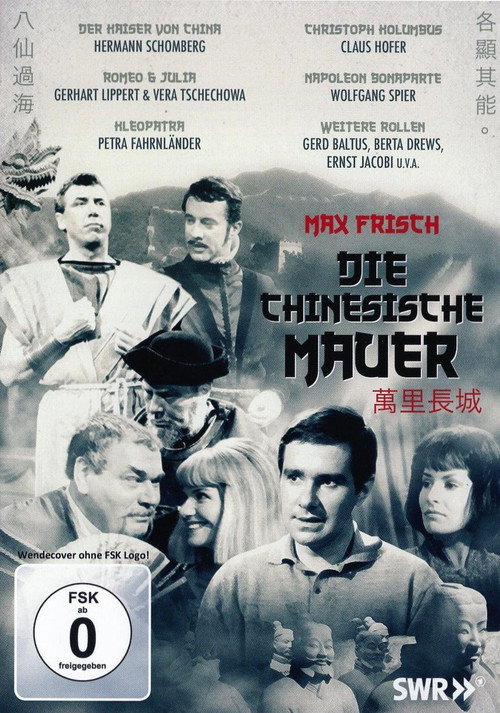
Die chinesische Mauer 1965
In *Die chinesische Mauer (1965)*, director Hans Lietzau crafts a wildly imaginative comedy set against the surreal backdrop of a grand masquerade ball at the court of Emperor Hwang Ti.
Director: Hans Lietzau
Cast






Frequently Asked Questions
What is *Die chinesische Mauer* (1965) about?
*Die chinesische Mauer* follows the Emperor Hwang Ti's extravagant victory ball, where the world's most powerful figures gather to celebrate the completion of the Great Wall. Among the guests are historical icons like Napoleon and Pontius Pilate, but a 20th-century intellectual disrupts the festivities, creating chaos and comedy.
Who directed *Die chinesische Mauer*?
The film was directed by Hans Lietzau, a German filmmaker known for his innovative approach to historical and comedic narratives.
Who stars in *Die chinesische Mauer*?
The film features a talented cast, including Hermann Schomberg, Claudia Sorbas, Charles Brauer, and Ernst Jacobi, who bring the eccentric characters to life.
Is *Die chinesische Mauer* (1965) worth watching?
While the IMDb rating is unlisted, this surreal comedy offers a fresh take on history and satire. Its clever premise and unique blend of genres make it a hidden gem for fans of 1960s European cinema and offbeat storytelling.
How long is *Die chinesische Mauer*?
The film runs for 95 minutes, offering a concise yet engaging story.
About Die chinesische Mauer (1965) — A Surreal Comedy Where History Meets the Great Wall
In *Die chinesische Mauer (1965)*, director Hans Lietzau crafts a wildly imaginative comedy set against the surreal backdrop of a grand masquerade ball at the court of Emperor Hwang Ti. The event celebrates the completion of the Great Wall, but the guest list is anything but ordinary—dictators, generals, and historical icons like Napoleon Bonaparte, Pontius Pilate, and Christopher Columbus mix with an unsuspecting 20th-century intellectual. This satirical fantasy blends history and anachronism, turning a royal celebration into a timeless commentary on power, ambition, and the absurdity of human conflicts. The film's whimsical tone and clever premise make it a standout in 1960s European cinema.
With its blend of humor, history, and social critique, *Die chinesische Mauer* offers a unique viewing experience. The director's playful approach challenges viewers to question the boundaries between eras and ideologies, all while delivering sharp wit and visual charm. The film's atmosphere is one of playful subversion, where ancient grandeur collides with modern absurdity, creating a comedic yet thought-provoking narrative.