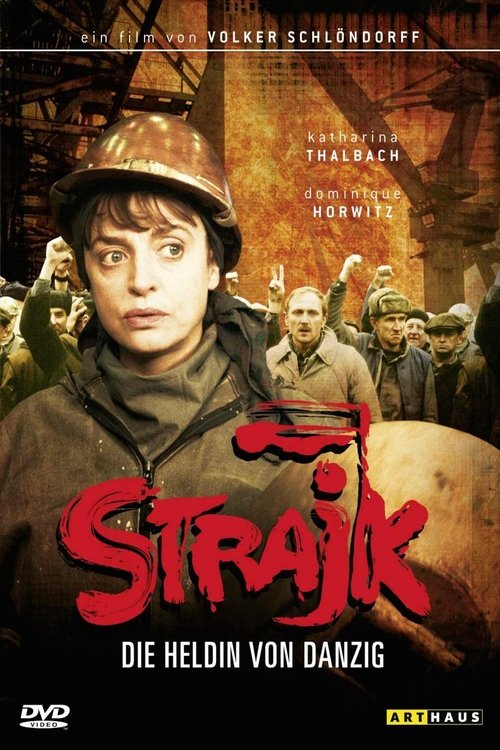
Strike 2007
In *Strike (2007)*, Volker Schlöndorff crafts a poignant drama that unfolds against the gritty backdrop of Poland's Solidarity movement.
Director: Volker Schlöndorff
Cast










Frequently Asked Questions
What is Strike (2007) about?
*Strike (2007)* tells the story of a nearly illiterate Polish woman whose relentless fight for workers' rights propels her into the heart of the Solidarity movement. Her personal journey intertwines with the larger struggle for labor justice, making her an unlikely but vital figure in Poland's fight for freedom.
Who directed Strike?
Strike was directed by Volker Schlöndorff, a celebrated filmmaker known for his incisive political dramas like *The Tin Drum*.
Who stars in Strike?
The film features Katharina Thalbach, Andrzej Chyra, Dominique Horwitz, Wojciech Solarz, and Ewa Telega in key roles.
Is Strike (2007) worth watching?
While it's unrated, *Strike (2007)* offers a gripping blend of historical drama and human resilience. Schlöndorff's direction and the cast's performances make it a compelling watch for fans of politically charged films.
How long is Strike?
Strike has a runtime of 104 minutes.
About Strike (2007) — A Woman's Fight That Changed Poland's Future
In *Strike (2007)*, Volker Schlöndorff crafts a poignant drama that unfolds against the gritty backdrop of Poland's Solidarity movement. The story centers on a woman with limited literacy whose unwavering determination propels her from obscurity to becoming one of the movement's pivotal figures. As tensions rise in the shipyard, her journey mirrors the collective struggle for workers' rights, blending personal resilience with the sweeping tide of historical change. Schlöndorff, known for his politically charged narratives, infuses the film with raw authenticity, capturing the spirit of resistance through stark visuals and understated performances.
The ensemble cast, led by Katharina Thalbach and Andrzej Chyra, delivers performances steeped in quiet intensity, grounding the film's emotional weight. *Strike (2007)* isn't just a historical account—it's a testament to how ordinary people can ignite extraordinary movements. With its dramatic tension and social relevance, the film resonates as both a tribute to the Solidarity era and a timeless exploration of courage in the face of oppression.