
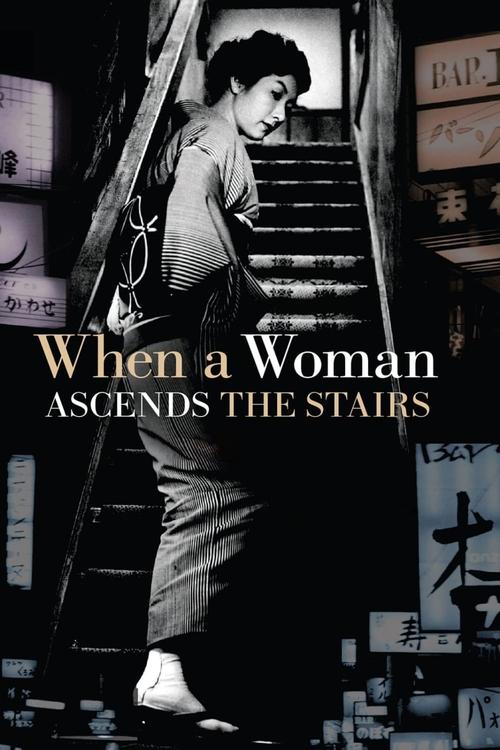
When a Woman Ascends the Stairs 1960
"The tree sprouts no matter how strong the wind blows."
Directed by the masterful Mikio Naruse, *When a Woman Ascends the Stairs (1960)* is a poignant drama that dives deep into the quiet resilience of one woman's struggle against the relentless tide of time and societal expectations.
Director: Mikio Naruse
Cast

Hideko Takamine
Keiko Yashiro

Masayuki Mori
Nobuhiko Fujisaki

Reiko Dan
Junko Inchihashi

Tatsuya Nakadai
Kenichi Komatsu

Daisuke Katō
Matsukichi Sekine

Ganjirō Nakamura II
Goda

Eitarō Ozawa
Minobe

Keiko Awaji
Yuri

Chieko Nakakita
Tomoko

Jun Tatara
Goldfish
Frequently Asked Questions
What is When a Woman Ascends the Stairs (1960) about?
The film follows Keiko, a 30-year-old widow working as a hostess in Tokyo's Ginza district. Struggling to maintain her dignity and financial independence, she navigates a world where outward elegance conceals financial strain and family pressures.
Who directed When a Woman Ascends the Stairs?
The film was directed by Mikio Naruse, a legendary Japanese filmmaker celebrated for his nuanced portrayals of women and social realism.
Who stars in When a Woman Ascends the Stairs?
The cast features Hideko Takamine as Keiko, Masayuki Mori, Reiko Dan, Tatsuya Nakadai, and Daisuke Katō in pivotal roles.
Is When a Woman Ascends the Stairs (1960) worth watching?
With its sharp social commentary and emotional depth, *When a Woman Ascends the Stairs* is a must-watch for fans of character-driven dramas. Naruse's direction and Takamine's performance make it a standout in post-war Japanese cinema.
How long is When a Woman Ascends the Stairs?
The film has a runtime of 111 minutes.
🎥 Trailer
About When a Woman Ascends the Stairs (1960) — A Glamorous yet Heartbreaking Tokyo Drama
Directed by the masterful Mikio Naruse, *When a Woman Ascends the Stairs (1960)* is a poignant drama that dives deep into the quiet resilience of one woman's struggle against the relentless tide of time and societal expectations. Set against the dazzling neon glow of Tokyo's Ginza district, the film follows Keiko—known to all as Mama—a 30-year-old widow navigating the precarious world of hostessing. With elegance and vulnerability, she masks her exhaustion behind polished smiles and carefully chosen attire, all while battling the financial demands of her demanding family. Behind her glamorous facade, she faces an unspoken truth: her youth is fading, and her future grows uncertain.
Naruse's razor-sharp storytelling exposes the contradictions of post-war Japan, where tradition clashes with modernity and personal dignity is often a luxury. The film's melancholic yet beautifully composed frames mirror Keiko's inner turmoil, making it a masterclass in emotional restraint. Its themes of sacrifice, aging, and the fleeting nature of identity resonate just as powerfully today, cementing *When a Woman Ascends the Stairs* as a timeless exploration of womanhood and survival.