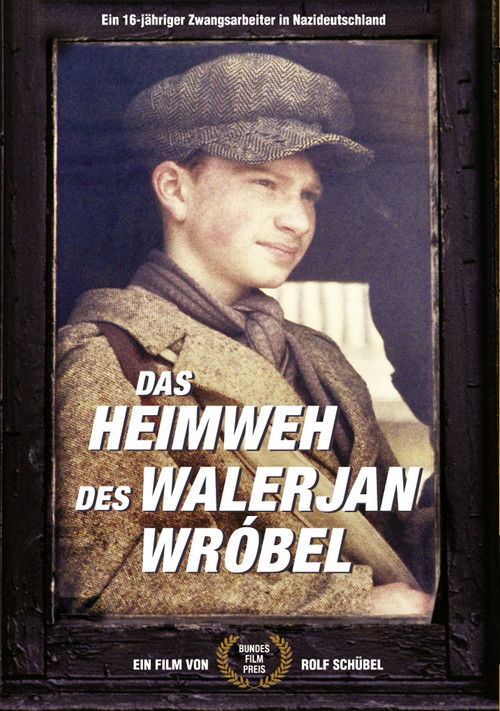
Walerjan Wrobel's Homesickness 1992
Set against the somber backdrop of World War II, *Walerjan Wrobel's Homesickness* (1992) follows the harrowing journey of a Polish teenager forcibly relocated to Nazi Germany as a laborer in 1941.
Director: Rolf Schübel
Cast






Frequently Asked Questions
What is Walerjan Wrobel's Homesickness (1992) about?
The film depicts the true story of Walerjan Wrobel, a Polish teenager forcibly relocated to Nazi Germany in 1941 as part of a labor program. It explores his desperate fight to preserve his identity and humanity amid the horrors of war and displacement.
Who directed Walerjan Wrobel's Homesickness?
Rolf Schübel directed *Walerjan Wrobel's Homesickness*, bringing a nuanced and emotionally charged vision to this historical drama.
Who stars in Walerjan Wrobel's Homesickness?
The film features Artur Pontek in the lead role, supported by Andrzej Mastalerz, Michał Staszczak, Michael Gwisdek, and Peter Striebeck.
Is Walerjan Wrobel's Homesickness (1992) worth watching?
While it's underrated on IMDb, this drama offers a powerful and emotionally resonant take on WWII forced labor. Its intimate focus and strong performances make it a compelling watch for fans of historical dramas seeking depth and authenticity.
How long is Walerjan Wrobel's Homesickness?
Walerjan Wrobel's Homesickness has a runtime of approximately 95 minutes.
About Walerjan Wrobel's Homesickness (1992) — A WWII Drama of Forced Labor and Resilience
Set against the somber backdrop of World War II, *Walerjan Wrobel's Homesickness* (1992) follows the harrowing journey of a Polish teenager forcibly relocated to Nazi Germany as a laborer in 1941. Directed by the accomplished Rolf Schübel, this drama unfolds with raw emotional weight, capturing the protagonist's desperate struggle to hold onto his identity while navigating the brutality of war. The film's historical gravity is matched by its intimate, almost claustrophobic focus on one boy's resilience amid overwhelming odds. Artur Pontek delivers a poignant performance as Walerjan, while a stellar supporting cast—including Andrzej Mastalerz, Michał Staszczak, and Michael Gwisdek—adds depth to the narrative. With its stark portrayal of displacement and survival, the movie lingers long after the credits roll.
Through Schübel's masterful direction, *Walerjan Wrobel's Homesickness* transcends its war drama roots to explore universal themes of belonging and the enduring power of home. The film's atmospheric tension mirrors the internal conflict of its young hero, who clings to fragile connections to his homeland despite the relentless machinery of oppression. Blending historical accuracy with deeply human drama, it stands as a testament to the resilience of the human spirit in the face of unimaginable cruelty.