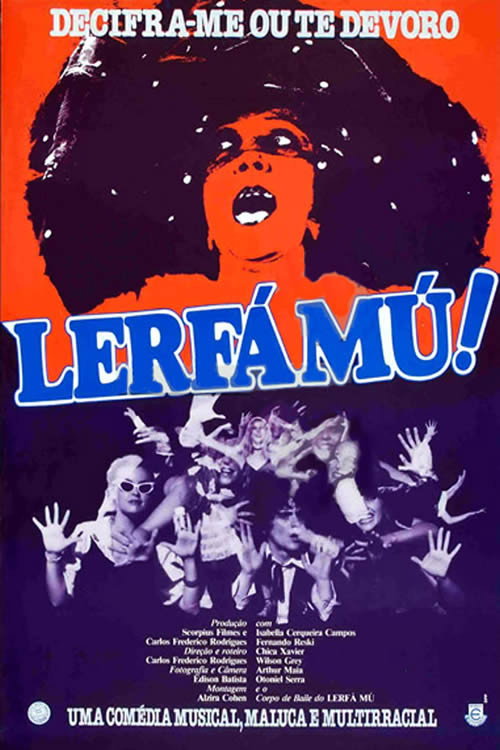
Lerfá Mú 1979
In the bustling streets of 1970s Rio de Janeiro, a mysterious wave of graffiti sweeps through the city, scrawling the cryptic phrase "Lerfá Mú" on walls from one end to the other.
Director: Carlos Frederico Rodrigues
Cast

Frequently Asked Questions
What is Lerfá Mú (1979) about?
This 1979 Brazilian comedy follows the strange phenomenon of mysterious graffiti appearing across Rio de Janeiro with the baffling words "Lerfá Mú." As the city becomes obsessed, authorities scramble to uncover the meaning behind the nonsensical phrase before panic sets in.
Who directed Lerfá Mú?
Carlos Frederico Rodrigues brought this quirky comedy to life, blending humor with a subtle commentary on urban myths.
Who stars in Lerfá Mú?
The film features a standout cast including Nena Ainhoren, Neusa Borges, Laís Braga, Mônica Brandt, and Deoclides Gouveia.
Is Lerfá Mú (1979) worth watching?
While unrated on IMDb, this lighthearted Brazilian comedy offers a fun glimpse into 1970s Rio de Janeiro. Its mix of absurdity and social satire makes it a charming time capsule for fans of vintage films and offbeat humor.
How long is Lerfá Mú?
Lerfá Mú has a runtime of 94 minutes.
About Lerfá Mú (1979) — Rio's quirky mystery that had everyone talking
In the bustling streets of 1970s Rio de Janeiro, a mysterious wave of graffiti sweeps through the city, scrawling the cryptic phrase "Lerfá Mú" on walls from one end to the other. As locals puzzle over the nonsensical words, authorities grow increasingly alarmed, unsure whether the graffiti signals a harmless trend or something far more sinister. Carlos Frederico Rodrigues' offbeat comedy dives into the absurdity of urban legends and collective paranoia, blending lighthearted humor with a dash of mystery that keeps the city—and its residents—on edge.
With a quirky ensemble cast led by Nena Ainhoren and Neusa Borges, *Lerfá Mú (1979)* captures a snapshot of Brazilian society grappling with the unknown, all while riding the waves of 70s counterculture. The film's playful tone contrasts with its underlying themes of social unease, making it a curious relic of its time—a comedy that's equal parts silly and strangely thought-provoking.