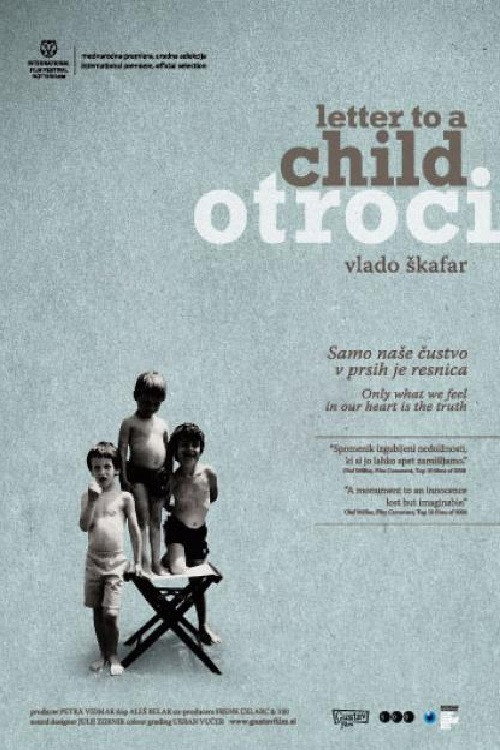
Letter to a Child 2009
Vlado Škafar's 2009 documentary Letter to a Child (2009) unfolds as a mosaic of quiet reflections, weaving together personal letters and heartfelt conversations that blur the line between audience and participant.
Director: Vlado Škafar
Frequently Asked Questions
What is Letter to a Child (2009) about?
Letter to a Child gathers strangers of all ages to share life stories through personal letters and guided monologues, capturing raw, unscripted reflections on existence. The film strips away performative storytelling to reveal intimate confessions, creating an experience that feels both deeply personal and universally relatable.
Who directed Letter to a Child?
The film was directed by Vlado Škafar, a filmmaker known for his observational and poetic approach to documentary storytelling.
Who stars in Letter to a Child?
The documentary features a diverse cast of real-life participants, including kindergarten children, adults, and elderly individuals sharing their life experiences.
Is Letter to a Child (2009) worth watching?
While it lacks traditional entertainment value, Letter to a Child offers a moving and introspective journey for documentary enthusiasts and anyone drawn to raw human stories. Its reflective tone and emotional authenticity make it a compelling watch for those seeking substance over spectacle.
How long is Letter to a Child?
The film runs for 100 minutes.
About Letter to a Child (2009) — A documentary journey of life stories and personal reflections
Vlado Škafar's 2009 documentary Letter to a Child (2009) unfolds as a mosaic of quiet reflections, weaving together personal letters and heartfelt conversations that blur the line between audience and participant. Through a series of guided monologues, the film invites strangers—ranging from wide-eyed kindergarteners to seasoned elders—to share their life stories, stripped of pretence and polished for the camera. Shot with minimal intrusion, the intimate moments emerge when the speakers forget they're being filmed, revealing raw, unfiltered glimpses into their joys, regrets, and hard-won wisdom. As one voice gives way to the next, the documentary transforms into a mirror, making space for viewers to confront their own memories, choices, and the quiet passage of time.
Letter to a Child (2009) is less a traditional narrative and more a contemplative experience, where the absence of dramatic structure amplifies the emotional weight of each confession. The film's tone is meditative, its pacing deliberate, allowing space for the weight of lived experience to settle over the viewer like a soft rain. By the final frame, it leaves audiences alone with themselves, their own life stories, and the gentle push to reflect on what truly matters.