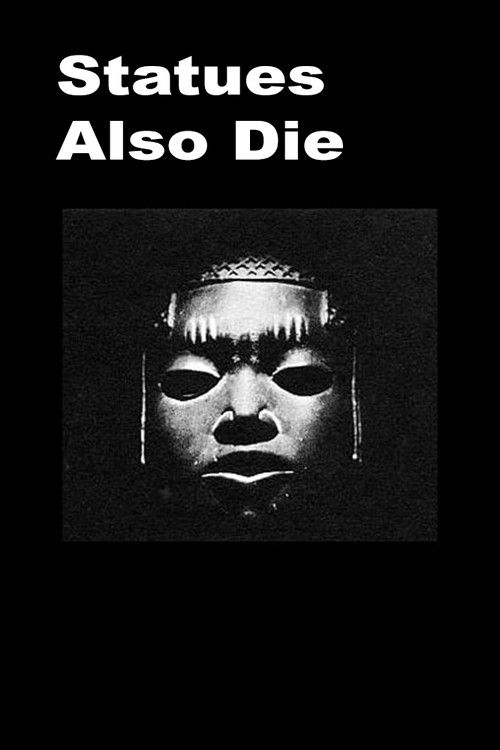
Statues Also Die 1953
Pioneering anti-colonial short film *Statues Also Die (1953)* by Chris Marker peers behind the museum glass to question why African art is locked in ethnographic cases while classical treasures dominate grand galleries.
Director: Chris Marker
Cast



Frequently Asked Questions
What is Statues Also Die (1953) about?
This 30-minute documentary interrogates why African sculptures—once integral to spiritual life—are relegated to ethnographic displays while Greco-Roman works adorn museums as masterpieces. It traces the journey of these objects from sacred contexts to colonial showcases, exposing the cultural violence embedded in their new presentation.
Who directed Statues Also Die?
The film was directed by Chris Marker, the legendary French filmmaker and essayist known for blending politics with poetic visuals.
Who stars in Statues Also Die?
The film features narration by Jean Négroni, appearances by politician François Mitterrand and Pope Pius XII, and a cameo by boxing icon Sugar Ray Robinson.
Is Statues Also Die (1953) worth watching?
As a half-hour documentary with outsized historical impact, *Statues Also Die* is essential for film and African studies buffs. Though unrated on IMDb, its status as a banned anti-colonial landmark speaks volumes—pairing sharp critique with haunting imagery that lingers long after the credits.
How long is Statues Also Die?
The film runs for 30 minutes.
About Statues Also Die (1953) — How Colonial Eyes Turned African Art to Ornaments
Pioneering anti-colonial short film *Statues Also Die (1953)* by Chris Marker peers behind the museum glass to question why African art is locked in ethnographic cases while classical treasures dominate grand galleries. Commissioned by *Présence Africaine*, the 30-minute documentary dissects the cultural erasure that strips sub-Saharan sculptures of their spiritual significance, turning sacred objects into colonial curios. Between meditative narration by Jean Négroni and archival whispers, it evokes a quiet fury that simmers beneath measured tones—an atmosphere of intellectual resistance that led to its eight-year ban in France.
A lightning rod for post-war debates, the film bridges documentary realism with poetic montage, challenging viewers to see African artifacts not as relics of the past but as living voices silenced by Western institutions. Themes of decolonisation and cultural appropriation pulse through every frame, making *Statues Also Die (1953)* a landmark of Third Cinema and a manifesto in celluloid form.