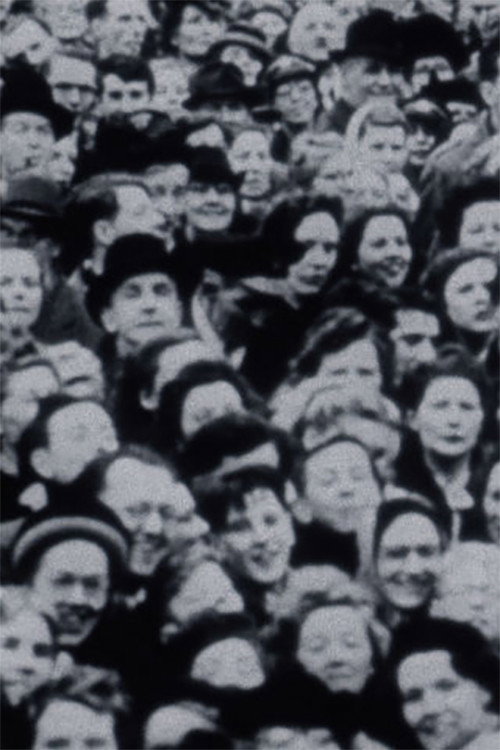
Watching for the Queen 1973
David Rimmer's *Watching for the Queen* (1973) is a hypnotic 11-minute short film that dives into the interplay between perception and pattern.
Director: David Rimmer
Frequently Asked Questions
What is Watching for the Queen (1973) about?
*Watching for the Queen* is a short experimental film that explores how the human eye and brain process visual information. Using minimal narrative and repetitive imagery, director David Rimmer investigates themes of pattern recognition and aesthetic ordering to create a meditative viewing experience.
Who directed Watching for the Queen?
The film was directed by David Rimmer, a pioneering figure in Canadian experimental cinema known for his innovative approach to visual storytelling.
Who stars in Watching for the Queen?
The cast is not publicly listed, as the film focuses on visual and conceptual elements rather than traditional performances.
Is Watching for the Queen (1973) worth watching?
Though unconventional, *Watching for the Queen* offers a unique cinematic experience for fans of experimental and avant-garde films. Its exploration of perception and rhythm makes it a compelling watch for those interested in the boundaries of narrative and visual artistry.
How long is Watching for the Queen?
*Watching for the Queen* runs for 11 minutes.
About Watching for the Queen (1973) — A Minimalist Masterpiece of Pattern and Perception
David Rimmer's *Watching for the Queen* (1973) is a hypnotic 11-minute short film that dives into the interplay between perception and pattern. Blending experimental techniques with mathematical precision, Rimmer crafts a minimalist narrative that challenges viewers to detect subtle rhythms within seemingly anonymous footage. Drawing on concepts like saccadic eye movement and feature rings from behavioral science, the film transforms abstract phenomena into a mesmerizing visual puzzle, where rhythm and repetition take center stage over traditional storytelling.
The project, preserved by the Academy Film Archive in 2014, exemplifies Rimmer's fascination with how the brain interprets visual data. With no clear plot or dialogue, *Watching for the Queen* invites audiences to engage in active observation, testing their own ability to recognize patterns in motion. The result is an atmospheric, thought-provoking piece that lingers long after the credits roll—ideal for fans of avant-garde cinema and experimental filmmaking.