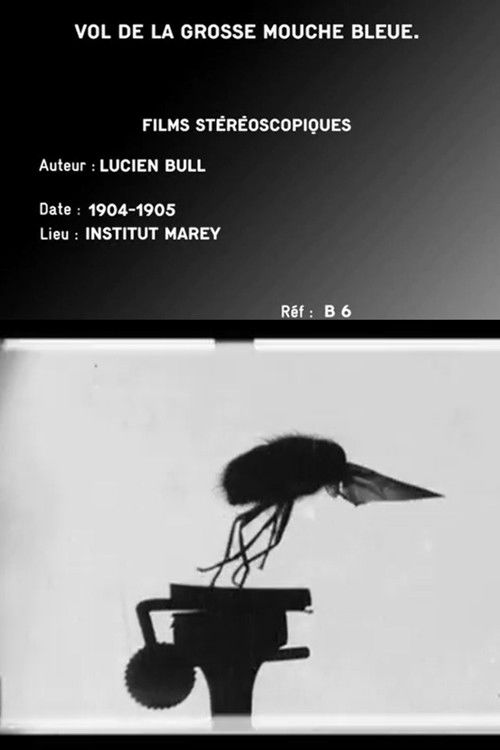
Flight of the Large Blue Fly 1905
Directed by pioneering chronophotography expert Lucien Georges Bull, *Flight of the Large Blue Fly (1905)* is a fleeting yet fascinating glimpse into the early days of motion-picture science.
Director: Lucien Georges Bull
Frequently Asked Questions
What is Flight of the Large Blue Fly (1905) about?
This short chronophotographic film captures the rapid, graceful flight of a large blue fly in stuttering motion, thanks to early camera techniques. It's less a narrative piece and more a scientific experiment turned cinematic spectacle, showcasing how movement could be dissected frame by frame.
Who directed Flight of the Large Blue Fly?
Director information is not available, though the film is attributed to Lucien Georges Bull, a pioneer in chronophotography and high-speed photography.
Who stars in Flight of the Large Blue Fly?
Runtime details are not listed.
Is Flight of the Large Blue Fly (1905) worth watching?
As a historical curiosity rather than a conventional film, *Flight of the Large Blue Fly* offers limited entertainment value by modern standards. Its value lies in its groundbreaking technique and role as a precursor to slow-motion cinematography, making it essential viewing for film historians and early cinema enthusiasts.
How long is Flight of the Large Blue Fly?
*Flight of the Large Blue Fly* runs for approximately 1 minute.
About Flight of the Large Blue Fly (1905) — The Stunning 1-Minute Chronophotography Breakthrough
Directed by pioneering chronophotography expert Lucien Georges Bull, *Flight of the Large Blue Fly (1905)* is a fleeting yet fascinating glimpse into the early days of motion-picture science. Shot around 1904-1905, this one-minute documentary uses groundbreaking camera techniques to freeze the rapid flutter of a large blue fly—likely the species Protophormia terraenovae—in mid-air, turning insect flight into a mesmerizing ballet of biology and technology. Blending curiosity with technical innovation, the film captures a moment of scientific wonder, offering viewers a rare window into how early filmmakers transformed nature into art through the lens. Its brevity belies its historical significance, marking one of cinema's first attempts to dissect movement in ways that would later inspire both entomologists and filmmakers alike.
As a precursor to modern slow-motion cinematography, *Flight of the Large Blue Fly* feels like a time capsule of photographic ambition, where the smallest subjects become grand experiments. The flickering black-and-white frames pulse with a playful yet methodical energy, underscoring Bull's fascination with breaking down the invisible into the observable. More than a century later, it remains a charming curiosity—a snapshot of innovation that bridges the gap between zoological study and cinematic artistry, perfect for history buffs and film enthusiasts tracing the roots of visual storytelling.