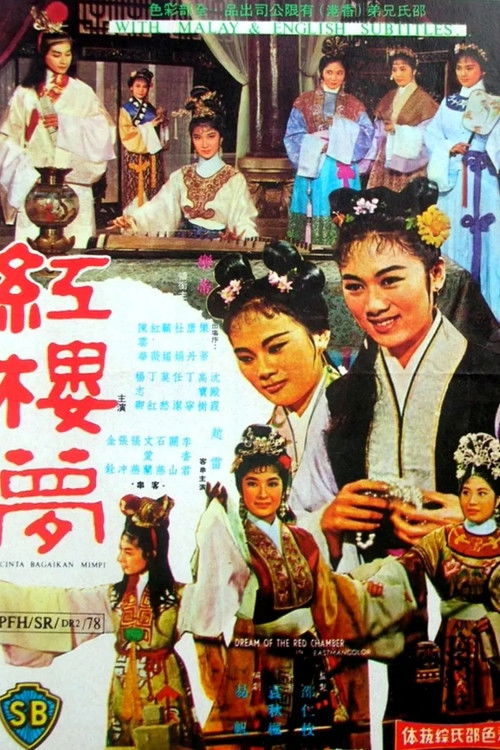
The Dream of the Red Chamber 1962
Yuan Qiu-Feng's lavish adaptation of China's most beloved literary classic, *The Dream of the Red Chamber* (1962), transforms the sprawling 18th-century love story into a visual masterpiece.
Director: Yuan Qiu-Feng
Cast

Betty Loh Ti
Lin Dai Yu
Yam Kit
Chia Bao Yu
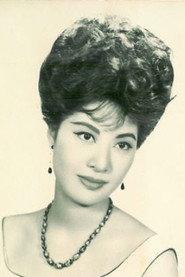
Pat Ting Hung
Xue Bao Chai
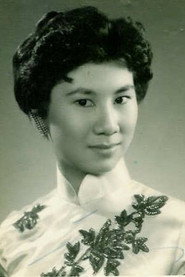
Kong Hung
Xue Yan
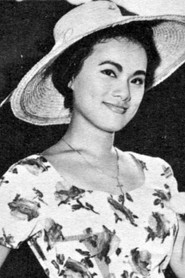
Margaret Tu Chuan
Zi Juan
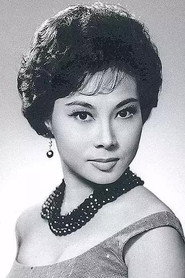
Carrie Ku Mei
Jin Chuan / Lin Dai Yu (singing voice)
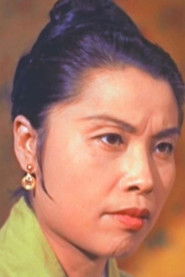
Hung Mei
Madame Jia Tai
Chan Wan-Wa
Madame Wang
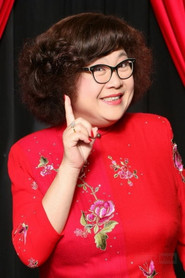
Lydia Shum Tin-Ha
Little Fool
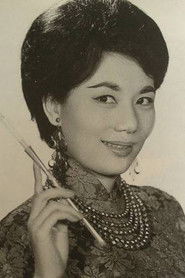
Kao Pao-Shu
Elder Brother's Wife Wang Xifeng
Frequently Asked Questions
What is The Dream of the Red Chamber (1962) about?
This cinematic adaptation follows Jia Baoyu, a sensitive aristocratic youth, and his cousin Lin Daiyu, whose deep love is doomed by societal expectations and the decline of their family. The story unfolds against the opulent yet fragile world of 18th-century China, capturing the beauty and sorrow of fleeting youth.
Who directed The Dream of the Red Chamber?
The film was directed by Yuan Qiu-Feng, a filmmaker celebrated for bringing literary masterpieces to the screen with visual splendor and emotional depth.
Who stars in The Dream of the Red Chamber?
The film stars Betty Loh Ti as Lin Daiyu, Yam Kit as Jia Baoyu, and features Pat Ting Hung, Kong Hung, and Margaret Tu Chuan in pivotal roles.
Is The Dream of the Red Chamber (1962) worth watching?
Absolutely—this adaptation is widely regarded as the finest film version of the classic novel. Its rich visuals, emotional resonance, and faithful yet cinematic storytelling make it a must-see for fans of historical drama and romance, even decades after its release.
How long is The Dream of the Red Chamber?
The film runs for 101 minutes.
About The Dream of the Red Chamber (1962) — A Lavish Classic of Chinese Literature on Film
Yuan Qiu-Feng's lavish adaptation of China's most beloved literary classic, *The Dream of the Red Chamber* (1962), transforms the sprawling 18th-century love story into a visual masterpiece. Three years of meticulous pre-production and a full year of filming culminate in a sumptuous drama that captures both the elegance of imperial China and the timeless emotions of forbidden romance. The film follows star-crossed lovers Jia Baoyu and Lin Daiyu against the backdrop of a declining aristocratic family, weaving themes of destiny, fleeting beauty, and the nostalgia for a world on the brink of change. With rich costumes, sweeping music, and poignant performances, this version endures as a high point of 1960s Chinese cinema.
Critics and audiences alike hailed it as the definitive cinematic interpretation of the novel, praised for its faithful yet cinematic storytelling. The Dream of the Red Chamber (1962) remains a cultural touchstone, blending historical grandeur with intimate human drama—a testament to the power of adaptation done right.