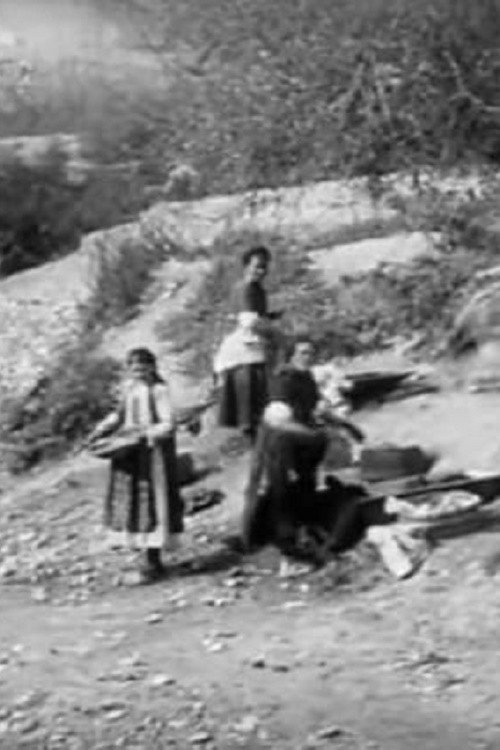
Washerwomen 1905
One of the earliest surviving films ever made, *Washerwomen* (1905) offers a rare glimpse into early cinema through a simple yet captivating scene.
Director: Yanaki Manaki
Frequently Asked Questions
What is Washerwomen (1905) about?
The film depicts two women washing clothes outdoors, a mundane yet historically significant moment captured on early motion-picture film. It provides a window into daily life in the early 1900s, showcasing labor and community without embellishment.
Who directed Washerwomen?
The film was directed by Yanaki Manaki, a pioneer in early cinema and part of the influential Manaki brothers filmmaking duo.
Who stars in Washerwomen?
The cast details are not recorded, but the film prominently features two women engaged in the act of washing clothes.
Is Washerwomen (1905) worth watching?
While it's only a minute long, *Washerwomen* is a valuable artifact for silent film enthusiasts and historians. Its unadorned realism offers a rare look at early 20th-century life, making it a curiosity worth experiencing despite its brevity.
How long is Washerwomen?
The film runs for exactly 1 minute.
Washerwomen (1905): Rediscovering Early Cinema's Simplest Masterpiece
One of the earliest surviving films ever made, *Washerwomen* (1905) offers a rare glimpse into early cinema through a simple yet captivating scene. Directed by pioneering filmmaker Yanaki Manaki, this one-minute documentary captures two women immersed in the timeless chore of washing clothes by a riverside. The scene exudes a quiet authenticity, transporting viewers to an era when daily routines unfolded without fanfare. Though brief, the film reflects the everyday lives of people long before modern conveniences, preserving a slice of early 20th-century labor and community. With no dialogue or dramatic embellishments, *Washerwomen* relies entirely on visual storytelling, showcasing the raw beauty of ordinary moments.
This early work by the Manaki brothers—Yanaki and Milton—stands as a testament to the power of simple cinematography. Their filmmaking predates many narrative conventions, focusing instead on the unfiltered reality of people at work. While the runtime is fleeting, the atmosphere lingers with nostalgia, inviting reflection on how labor and community have evolved over time. For film historians, casual viewers, or anyone curious about the origins of cinema, *Washerwomen* (1905) remains a fascinating artifact worth exploring.