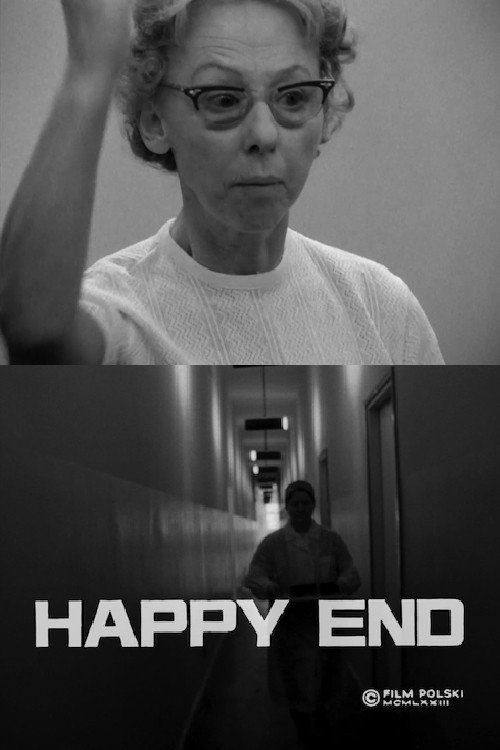
Happy End 1973
In *Happy End (1973)*, director Marcel Łoziński crafts a chilling, 17-minute documentary that unfolds like a tense political drama. The film captures a pivotal moment during a party meeting where a purge is expected to unfold in the style of the March 1968 purges.
Director: Marcel Łoziński
Frequently Asked Questions
What is Happy End (1973) about?
The film portrays a party meeting where a political purge is anticipated, but instead of a clean resolution, it descends into a psychodrama. The tension escalates as hidden motives and personal conflicts surface, transforming an ordinary gathering into a charged psychological battle.
Who directed Happy End?
Marcel Łoziński directed *Happy End (1973)*. Known for his incisive documentary work, Łoziński masterfully blends observational realism with dramatic tension to explore complex social dynamics.
Who stars in Happy End?
Director information and cast details for *Happy End (1973)* are not publicly listed.
Is Happy End (1973) worth watching?
As a 17-minute documentary, *Happy End (1973)* is a compelling watch for fans of political dramas and psychological thrillers. Its tight runtime and intense atmosphere make it a standout in the genre, offering a thought-provoking glimpse into the fractures of power and human behavior.
How long is Happy End?
*Happy End* has a runtime of 17 minutes.
About Happy End (1973) — A 17-Minute Documentary That Packs a Political Punch
In *Happy End (1973)*, director Marcel Łoziński crafts a chilling, 17-minute documentary that unfolds like a tense political drama. The film captures a pivotal moment during a party meeting where a purge is expected to unfold in the style of the March 1968 purges. Instead of a straightforward political maneuver, the gathering spirals into an intense psychodrama, exposing raw emotions, hidden agendas, and the fragility of human relationships under pressure. With a stark, observational lens, Łoziński transforms a seemingly mundane event into a gripping study of power, fear, and the unraveling of social facades.
Set against the backdrop of a tense political era, *Happy End (1973)* immerses viewers in a claustrophobic atmosphere where every word and glance carries weight. The documentary's brevity belies its depth, offering a microcosm of societal tensions that feel both timeless and painfully specific. As the meeting veers off-script, the film becomes a psychological thriller disguised as a political allegory, leaving audiences to question the true nature of the "happy ending" it promises.