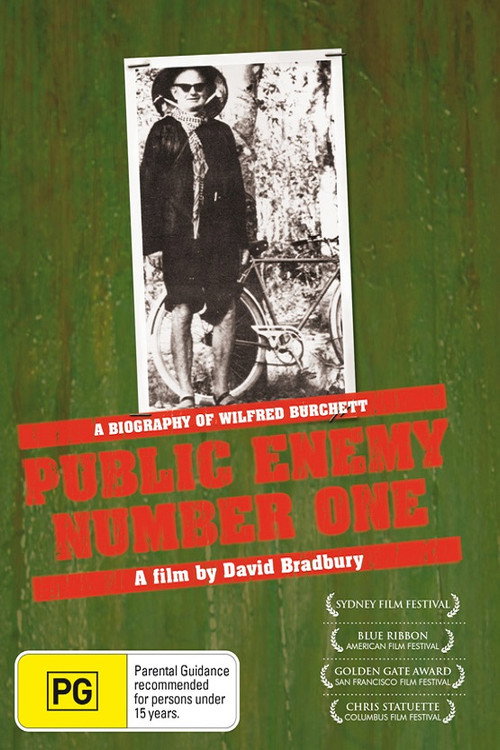
Public Enemy Number One 1981
David Bradbury's *Public Enemy Number One (1981)* dives into the controversial legacy of Australian journalist Wilfred Burchett, a maverick reporter who covered some of the 20th century's most pivotal conflicts from the ground up.
Director: David Bradbury
Cast
Frequently Asked Questions
What is Public Enemy Number One (1981) about?
This documentary follows Australian journalist Wilfred Burchett, exploring his groundbreaking—and controversial—coverage of major 20th-century conflicts, from Hiroshima to Vietnam. Through interviews and archival footage, the film examines how his perspective challenged dominant narratives and earned him both praise and persecution.
Who directed Public Enemy Number One?
The film was directed by David Bradbury, an Australian filmmaker known for his politically charged documentaries.
Who stars in Public Enemy Number One?
The documentary prominently features Australian journalist Wilfred Burchett, with additional context provided by archival interviews and news footage.
Is Public Enemy Number One (1981) worth watching?
Though unrated on IMDb, this 60-minute documentary offers a gripping look at journalism's role in wartime and the price of dissent. Its mix of personal reflection and historical footage makes it compelling for history buffs and those interested in media ethics, even if it leans toward a niche audience.
How long is Public Enemy Number One?
The runtime for *Public Enemy Number One* is approximately 60 minutes.
About Public Enemy Number One (1981) — The Journalist Who Saw Wars Differently
David Bradbury's *Public Enemy Number One (1981)* dives into the controversial legacy of Australian journalist Wilfred Burchett, a maverick reporter who covered some of the 20th century's most pivotal conflicts from the ground up. By the time of his death in 1983, Burchett had become a polarizing figure—hailed as a fearless truth-seeker by some, branded a traitor by others, particularly in his home country of Australia. This compelling documentary blends intimate interviews with Burchett in his later years with haunting archival footage and photographs, reconstructing his journey from being the first Western journalist to enter Hiroshima after the atomic bombing to his groundbreaking (and often censured) coverage of the Vietnam War. The film doesn't just recount history; it invites viewers to question who writes it and why.
Beneath its surface lies a deeper meditation on journalism itself—how conviction can clash with national narratives, and how the cost of speaking truth to power can reshape a life. Bradbury's direction weaves together Burchett's defiant spirit with the raw visuals of war zones, creating a tone that is alternately somber and electrifying. The documentary serves as both a tribute and an interrogation, leaving audiences to ponder whether Burchett was a visionary or a villain—or simply a man who refused to look away.