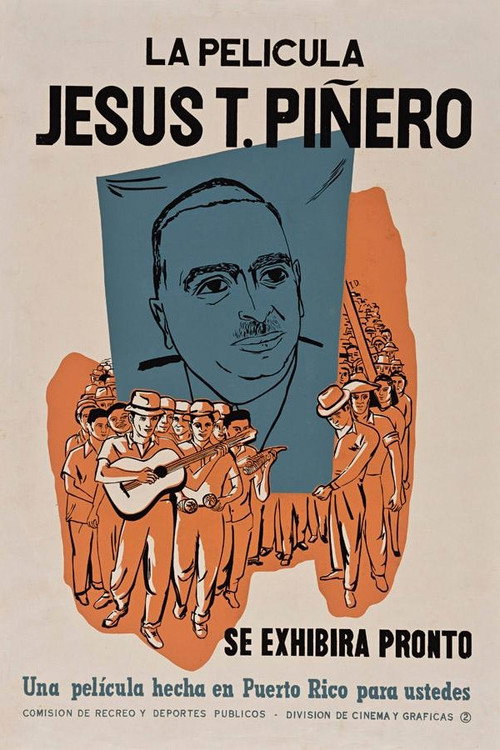
Jesús T. Piñero 1948
Jesús T. Piñero (1948) stands as a compelling historical documentary capturing a pivotal moment in Puerto Rican political history. Directed by Jack Delano, this 26-minute film chronicles the island's response to Jesús T.
Director: Jack Delano
Cast
Frequently Asked Questions
What is Jesús T. Piñero (1948) about?
This documentary explores how Puerto Ricans reacted when Jesús T. Piñero became the island's first locally-born Governor, capturing the community's hopes and concerns during this historic political transition.
Who directed Jesús T. Piñero?
The film was directed by Jack Delano, who brought his documentary filmmaking expertise to chronicle this significant moment in Puerto Rican governance.
Who stars in Jesús T. Piñero?
The documentary features Jesús T. Piñero and Camilo Fraticelli in key roles, with Piñero appearing as himself in this historical account.
Is Jesús T. Piñero (1948) worth watching?
As an unrated historical documentary, it offers valuable insight into Puerto Rican political history and cultural identity, making it worthwhile for viewers interested in Caribbean studies and mid-20th century documentary filmmaking.
How long is Jesús T. Piñero?
The documentary runs for 26 minutes.
About Jesús T. Piñero (1948) — Historic Puerto Rican Documentary
Jesús T. Piñero (1948) stands as a compelling historical documentary capturing a pivotal moment in Puerto Rican political history. Directed by Jack Delano, this 26-minute film chronicles the island's response to Jesús T. Piñero's historic appointment as Puerto Rico's first locally-born Governor, offering intimate glimpses into the hopes and concerns of everyday citizens during this transformative era. The documentary features Piñero himself alongside Camilo Fraticelli, creating an authentic portrait that blends personal narrative with broader social commentary.
This short but significant film serves as both historical record and cultural artifact, documenting the complex emotions surrounding Piñero's rise to power. Through Delano's lens, viewers witness the intersection of politics, identity, and community as Puerto Ricans grapple with their evolving relationship with the United States. The atmosphere reflects the post-war period's uncertainty and optimism, making it essential viewing for those interested in Caribbean history and documentary filmmaking of the era.