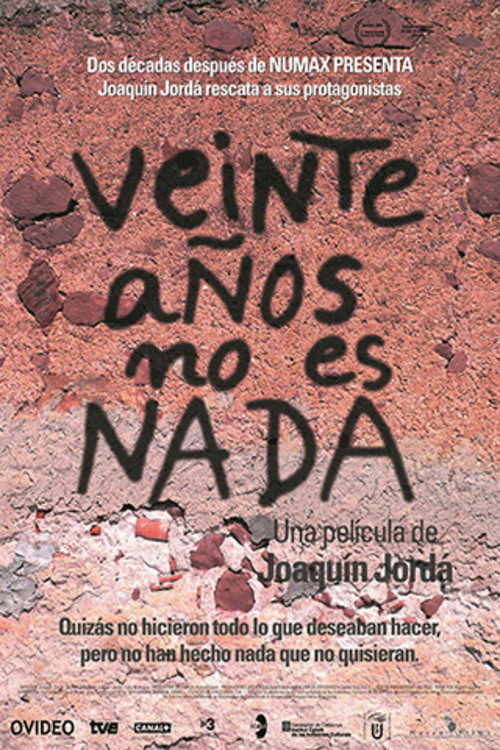
Veinte años no es nada 2004
Veinte años no es nada (2004) revisits the legacy of a historic worker-led experiment in Barcelona, weaving together archival footage and present-day interviews to explore how the Numax factory's self-management movement shaped a generation.
Director: Joaquín Jordá
Cast
Frequently Asked Questions
What is Veinte años no es nada (2004) about?
This documentary revisits the 1970s Numax factory workers in Barcelona, who self-managed their workplace as it faced closure. Two decades later, the same workers reflect on how their bold experiment shaped their lives and Spain's social landscape. Director Joaquín Jordá merges archival footage with new interviews to create a powerful portrait of labor and legacy.
Who directed Veinte años no es nada?
The film was directed by Joaquín Jordá, a renowned Spanish filmmaker celebrated for his socially conscious documentaries.
Who stars in Veinte años no es nada?
The documentary features Josefina Altamira, Joann Arqué, and Fernanda Gázquez, three workers whose experiences anchor the story.
Is Veinte años no es nada (2004) worth watching?
Absolutely, for those interested in social documentaries and labor history. Jordá's thoughtful approach and the workers' candid reflections make it a compelling watch. While not widely rated, its themes of resilience and collective action resonate deeply.
How long is Veinte años no es nada?
Veinte años no es nada runs for 117 minutes, immersing viewers in its dual timeline of past and present.
About Veinte años no es nada (2004) — A documentary revisiting Spain's worker revolution through lost footage and time
Veinte años no es nada (2004) revisits the legacy of a historic worker-led experiment in Barcelona, weaving together archival footage and present-day interviews to explore how the Numax factory's self-management movement shaped a generation. Director Joaquín Jordá, known for his incisive blend of documentary and social critique, crafts a reflective journey through Spain's labor struggles and political evolution over two decades. The film contrasts the idealism of 1970s workers with their later realities, evoking a sense of nostalgia and resilience. Through the voices of Josefina Altamira, Joann Arqué, and Fernanda Gázquez—former employees who entrusted their story to Jordá—the documentary becomes a time capsule of collective memory. The atmosphere is raw yet hopeful, blending past frustrations with present-day reflections on identity and labor rights.
Originally titled *Numax presenta…* (1980), this follow-up serves as both a tribute and a reckoning, capturing the spirit of an era when workers dared to take control. The film's deeply human approach makes it essential viewing for fans of socio-political cinema, offering a poignant reminder that the fight for justice doesn't end with the closing of a factory door.