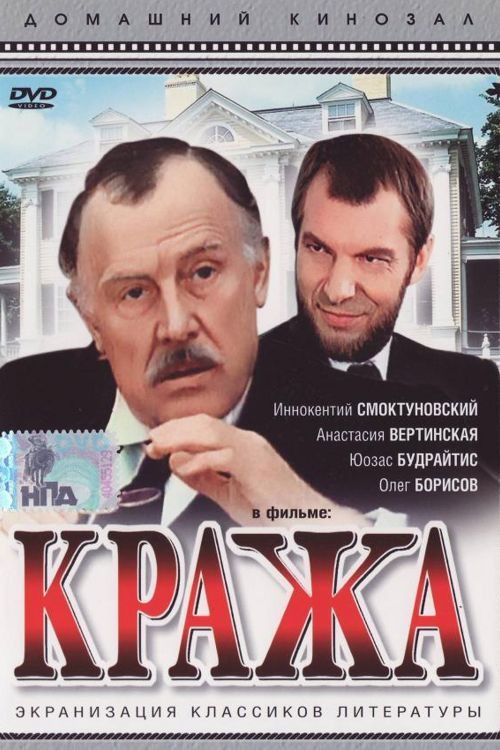
Theft 1982
Directed by Leonid Pchyolkin, Theft (1982) is a gripping crime drama that unravels the intricate web of corruption in Washington, DC.
Director: Leonid Pchyolkin
Cast





Frequently Asked Questions
What is Theft (1982) about?
Theft (1982) follows Howard Knox, a determined Congressman who dares to expose the corrupt activities of industrial magnate Anthony Starkweather and his allies.
Who directed Theft?
Theft was directed by Leonid Pchyolkin, a master of gripping crime dramas.
Who stars in Theft?
The film features a talented cast, including Innokentiy Smoktunovskiy, Anastasiya Vertinskaya, and Juozas Budraitis.
Is Theft (1982) worth watching?
While Theft (1982) may not have received a high IMDb rating, its gripping narrative and thought-provoking themes make it a worthwhile watch for fans of crime dramas.
How long is Theft?
Theft (1982) has a runtime of 160 minutes.
About Theft (1982) — A Gripping Crime Drama Unfolds in the Nation's Capital
Directed by Leonid Pchyolkin, Theft (1982) is a gripping crime drama that unravels the intricate web of corruption in Washington, DC. Howard Knox, a well-intentioned Congressman, is determined to expose the wrongdoings of industrial magnate Anthony Starkweather and his political allies. As Knox prepares to deliver a pivotal speech, he finds himself in a desperate battle against those who will stop at nothing to silence him. With its gripping narrative and thought-provoking themes, Theft (1982) is a must-watch for fans of mystery and drama. Starring Innokentiy Smoktunovskiy and Anastasiya Vertinskaya, this film masterfully weaves a tale of power, corruption, and the unrelenting pursuit of justice.
As the stakes rise, Knox's determination only grows stronger, but he soon realizes that his crusade may come at a great personal cost. With its taut atmosphere and well-crafted plot, Theft (1982) is a cinematic experience that will keep you on the edge of your seat. Don't miss this gripping tale of corruption and the unyielding spirit of a man who dares to challenge the status quo.