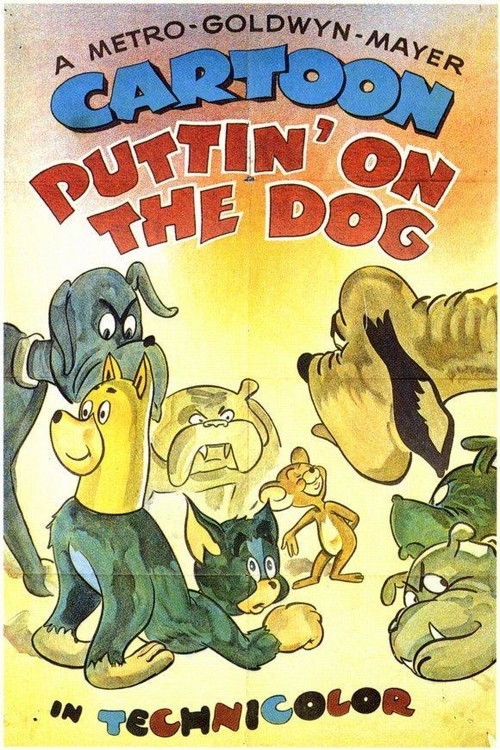
Puttin' on the Dog 1944
In this 1944 animated short from legendary cartoonist Joseph Barbera, the classic cat-and-mouse chase takes a hilariously absurd turn. When Tom finds himself cornered by Spike at the dog pound, desperation leads him to an unconventional disguise: the head of a stone statue.
Director: Joseph Barbera
Frequently Asked Questions
What is Puttin' on the Dog (1944) about?
When Tom inadvertently stumbles into the dog pound, he faces immediate danger from Spike. To survive, he disguises himself with the head of a nearby statue, but Jerry isn't fooled for a second. The short follows their escalating battle of wits as Tom's disguise keeps slipping off, leading to slapstick chaos.
Who directed Puttin' on the Dog?
Puttin' on the Dog was directed by Joseph Barbera, a pioneer of animation known for co-founding Hanna-Barbera Studios.
Who stars in Puttin' on the Dog?
The film stars the iconic duo of Tom and Jerry, with Spike joining the fray as the unexpected gatekeeper of the pound.
Is Puttin' on the Dog (1944) worth watching?
At just seven minutes long, this vintage cartoon delivers big on humor and timing. While modern audiences may expect high-definition visuals, the film's vintage charm and Barbera's direction make it a nostalgic treat for fans of classic animation. It's a fun, quick watch for anyone who enjoys the timeless rivalry of Tom and Jerry.
How long is Puttin' on the Dog?
Puttin' on the Dog runs for 7 minutes.
About Puttin' on the Dog (1944) — The Classic Cartoon Where Tom Wears a Stone Head
In this 1944 animated short from legendary cartoonist Joseph Barbera, the classic cat-and-mouse chase takes a hilariously absurd turn. When Tom finds himself cornered by Spike at the dog pound, desperation leads him to an unconventional disguise: the head of a stone statue. While the ruse temporarily fools the other canines, Jerry sees right through the trick and seizes every opportunity to thwart Tom's plans. The film's quick pacing and sharp visual gags deliver nonstop laughs, making it a standout entry in early animation history.
The cartoon's charm lies in its clever use of mismatched elements—stone meets fur, truth meets trickery—and the timeless dynamic between predator and prey. Barbera's direction ensures every second is packed with visual wit and playful tension, creating a delightfully chaotic atmosphere that keeps audiences engaged from start to finish.