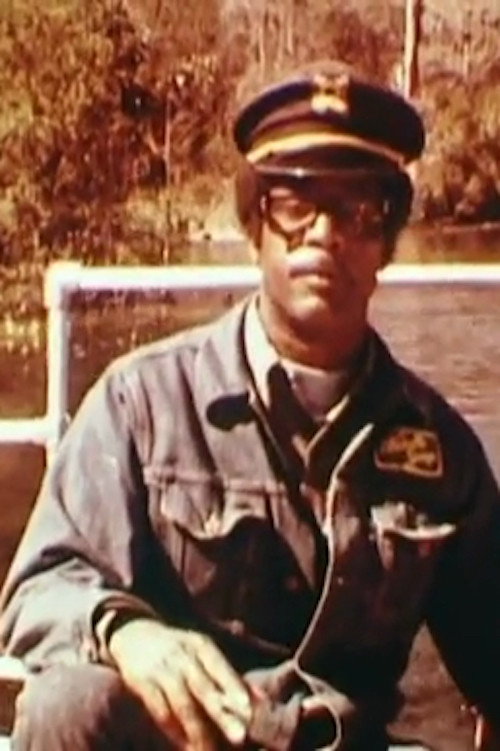
Observeillance 1975
Dive into the hypnotic world of *Observeillance (1975)*, a mesmerizing short documentary where director Tyler Turkle strips away the need for restless camerawork and instead lets the words paint the picture.
Director: Tyler Turkle
Frequently Asked Questions
What is Observeillance (1975) about?
*Observeillance (1975)* follows a tour guide's poetic narration of the Wakulla River in North Florida, where the camera remains static but the descriptions bring the landscape to life. The film turns the absence of movement into a unique storytelling device, immersing viewers in nature through vivid, near-musical observations.
Who directed Observeillance?
Tyler Turkle directed *Observeillance (1975)*, crafting a short but striking documentary that relies entirely on narration rather than visual dynamism.
Who stars in Observeillance?
The film features an unknown cast, with the focus squarely on the tour guide's narration as the primary performer.
Is Observeillance (1975) worth watching?
*Observeillance (1975)* may be a niche pick, but its innovative approach to documentary filmmaking makes it intriguing for fans of contemplative cinema. At just 3 minutes long, it's a quick yet thought-provoking experience, especially for those who appreciate nature-themed storytelling.
How long is Observeillance?
The runtime for *Observeillance (1975)* is 3 minutes.
About Observeillance (1975) — A Lyrical River Guide Without the Visuals
Dive into the hypnotic world of *Observeillance (1975)*, a mesmerizing short documentary where director Tyler Turkle strips away the need for restless camerawork and instead lets the words paint the picture. This 3-minute film follows a lyrical tour guide as he navigates the serene Wakulla River in North Florida, weaving vivid, almost musical descriptions of the region's Southern flora, fauna, and wildlife. Though the camera never wavers from its fixed position, Turkle's rich narrative transforms the experience into something far more immersive than mere visuals could ever achieve. The result is a contemplative meditation on perception, nature, and the power of storytelling itself.
Shot in the mid-1970s, *Observeillance (1975)* stands out as a curious artifact of its time—both minimalist and maximalist in its approach. Turkle's decision to prioritize auditory immersion over visual dynamism creates an unusual yet captivating atmosphere, inviting viewers to slow down and truly *listen* to the world around them. It's a fleeting but unforgettable glimpse into a simpler era of filmmaking, where subtlety and substance take center stage.