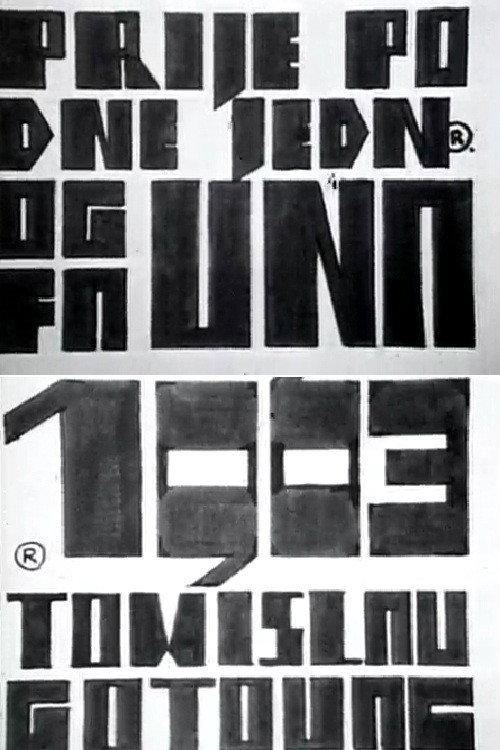
Forenoon of a Faun 1963
Tomislav Gotovac's *Forenoon of a Faun* (1963) is a fleeting yet hypnotic experiment in cinema, blending documentary realism with avant-garde technique.
Director: Tomislav Gotovac
Frequently Asked Questions
What is Forenoon of a Faun (1963) about?
The film unfolds as a series of three fixed-camera vignettes—a hospital balcony, a scarred wall, and a urban crossroads—each paired with evocative soundtracks from iconic movies. Its sparse visuals and layered audio create a mood of quiet introspection about the fleeting nature of moments.
Who directed Forenoon of a Faun?
The film was directed by Tomislav Gotovac, a pioneering Yugoslav filmmaker known for his experimental approach to cinema and performance art.
Who stars in Forenoon of a Faun?
Director information is not available for the cast of this short film, as the project focuses on urban environments and atmospheres rather than named performers.
Is Forenoon of a Faun (1963) worth watching?
Though unrated on IMDb and under eight minutes long, *Forenoon of a Faun* offers a fascinating glimpse into Yugoslavia's avant-garde film scene. Its abstract style and layered sound design make it a rewarding watch for fans of experimental cinema and minimalist storytelling.
How long is Forenoon of a Faun?
The runtime is approximately 8 minutes.
Forenoon of a Faun (1963): A Minimalist Masterpiece from Yugoslavia's New Wave
Tomislav Gotovac's *Forenoon of a Faun* (1963) is a fleeting yet hypnotic experiment in cinema, blending documentary realism with avant-garde technique. Shot in three stark sequences, the film observes hospital balconies, a scarred urban wall, and a bustling crossroads through a fixed camera's unblinking gaze. While the visuals remain detached, the soundtrack—lifted from Jean-Luc Godard's *Vivre sa vie* and George Pal's *The Time-Machine*—infuses the scenes with an eerie, almost surreal energy. The result is a meditation on isolation, transience, and the hidden poetry of everyday spaces, wrapped in the minimalist aesthetic of Yugoslavia's New Wave.
In just eight minutes, Gotovac crafts a visual poem that lingers like a half-remembered dream. The film's refusal to explain its imagery invites viewers to project their own emotions onto the stark tableaux, whether the starkness of a hospital balcony or the rhythmic chaos of a crossroads. The juxtaposition of sound and silence, stillness and motion, creates an atmosphere that's both clinical and deeply human—a snapshot of life caught between order and unpredictability.