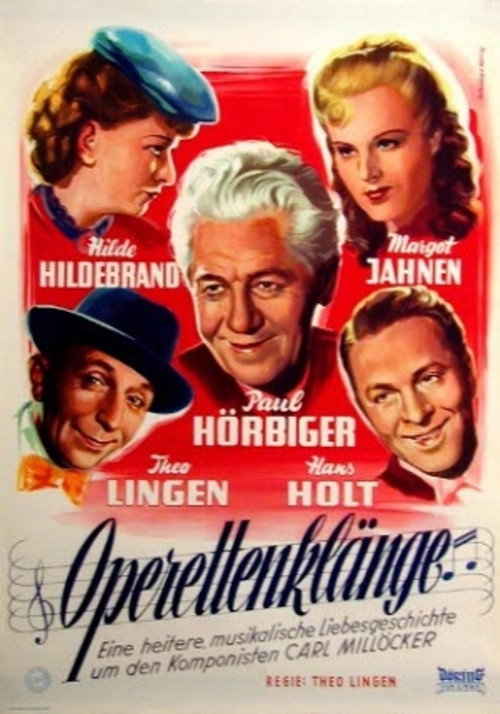
Glück muß man haben 1950
Glück muß man haben (1950) is a charming German comedy directed by Theo Lingen that captures the post-war spirit with warmth and humor.
Director: Theo Lingen
Cast


Frequently Asked Questions
What is Glück muß man haben (1950) about?
The film follows a series of comedic situations involving its ensemble cast as they navigate the pursuit of happiness in post-war Germany. Through humorous encounters and misunderstandings, the characters discover that contentment often comes from unexpected places.
Who directed Glück muß man haben?
The film was directed by Theo Lingen, a prominent figure in German cinema known for his work in comedy and character-driven stories during the mid-20th century.
Who stars in Glück muß man haben?
The main cast includes Paul Hörbiger, Hans Holt, Theo Lingen, and Hilde Hildebrand, all respected German actors who bring depth and humor to this classic comedy.
Is Glück muß man haben (1950) worth watching?
With its unrated status and classic German comedy credentials, this film offers genuine entertainment value for fans of vintage European cinema. The blend of post-war themes with lighthearted humor makes it an interesting historical artifact.
How long is Glück muß man haben?
The film runs for 78 minutes, making it a concise and engaging comedy perfect for a single sitting.
About Glück muß man haben (1950) — Classic German Comedy Everyone Should See
Glück muß man haben (1950) is a charming German comedy directed by Theo Lingen that captures the post-war spirit with warmth and humor. This 78-minute film showcases Lingen's signature style of blending everyday situations with gentle wit, creating an accessible entertainment that resonated with audiences seeking light-hearted escapism during a transformative period in German cinema.
The film features a talented ensemble cast led by Paul Hörbiger and Hans Holt, alongside director Lingen himself and Hilde Hildebrand. Together, they navigate the comedic misadventures that arise when ordinary people pursue happiness in unexpected ways. The movie exemplifies the classic German comedic tradition, balancing social commentary with broad humor that remains entertaining decades later.
Fans of vintage European cinema will appreciate the film's nostalgic atmosphere and timeless themes about finding joy in life's simple moments. Whether you're discovering classic German comedy for the first time or revisiting familiar territory, Glück muß man haben (1950) offers a delightful glimpse into mid-century filmmaking.