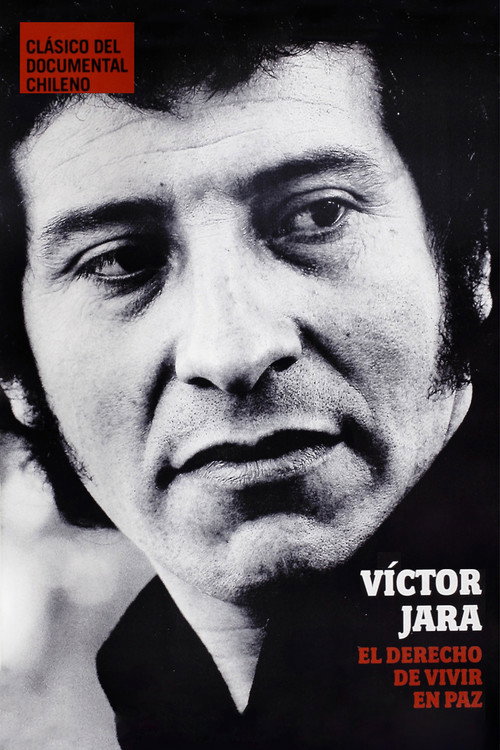
The Right to Live in Peace 1999
Dive into the powerful world of *The Right to Live in Peace (1999)*, Carmen Luz Parot's deeply moving documentary that paints an intimate portrait of legendary Chilean folk singer and activist Víctor Jara.
Director: Carmen Luz Parot
Cast
Frequently Asked Questions
What is The Right to Live in Peace (1999) about?
This documentary chronicles the life of Víctor Jara, a beloved Chilean singer-songwriter and activist whose music inspired a generation. His story takes a tragic turn when he's imprisoned, tortured, and killed by the Pinochet regime, leaving behind a legacy that refuses to be erased.
Who directed The Right to Live in Peace?
The film was directed by Carmen Luz Parot, a filmmaker known for her evocative work in music and political documentaries.
Who stars in The Right to Live in Peace?
The documentary features key contributions from Joan Jara, Víctor Jara's widow, alongside archival appearances and interviews that bring his story to life.
Is The Right to Live in Peace (1999) worth watching?
With its compelling blend of music, history, and human resilience, *The Right to Live in Peace* is a must-watch for fans of documentaries and those interested in the intersection of art and activism. Its emotional weight and historical significance make it a standout film in its genre.
How long is The Right to Live in Peace?
The documentary has a runtime of 100 minutes.
About The Right to Live in Peace (1999) — A haunting documentary of Víctor Jara's life and legacy
Dive into the powerful world of *The Right to Live in Peace (1999)*, Carmen Luz Parot's deeply moving documentary that paints an intimate portrait of legendary Chilean folk singer and activist Víctor Jara. Through archival footage and heartfelt interviews, including those with his widow Joan Jara, the film traces the extraordinary life of a man whose music became a rallying cry for justice—only to be silenced by the brutal Pinochet dictatorship. With its haunting melodies and unflinching look at oppression, the documentary captures both the soul of a nation and the price of defiance. Expect a film that lingers long after the credits roll, blending political urgency with the raw beauty of folk artistry.
Carmen Luz Parot crafts a cinematic homage that's as much about memory as it is about resistance, weaving together Víctor Jara's poetic lyrics with the stark realities of Chile's darkest era. The atmosphere is one of solemn tribute, where every note and every frame feels like a defiant whisper against tyranny. Whether you're a fan of music documentaries or a student of history, *The Right to Live in Peace* offers a poignant reminder of art's power to outlive its oppressors.