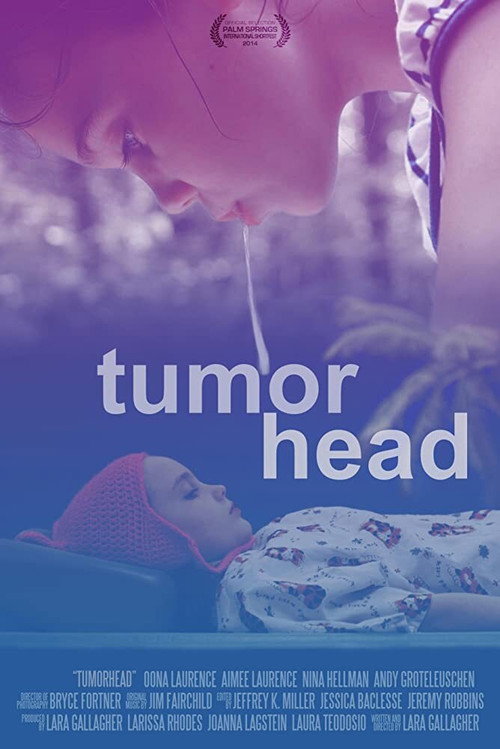
Tumorhead 2014
In Lara Jean Gallagher's striking short drama *Tumorhead* (2014), sibling rivalry takes a sharp, uncomfortable turn as Jean navigates the exhausting cycle of her little sister Mae's manipulative behavior.
Director: Lara Jean Gallagher
Cast





Frequently Asked Questions
What is Tumorhead (2014) about?
This 11-minute drama centers on Jean, who grows increasingly resentful of her younger sister Mae's manipulative behavior, especially after Mae uses her illness to justify taking Jean's prized possession. The film explores the toxic interplay between sibling dynamics and perceived unfairness.
Who directed Tumorhead?
Lara Jean Gallagher directed *Tumorhead*, bringing her keen eye for intimate character studies to this short but impactful drama.
Who stars in Tumorhead?
The film features Oona Laurence, Nina Hellman, Aimee Laurence, Andy Grotelueschen, and Sheilagh Weymouth in key roles.
Is Tumorhead (2014) worth watching?
Though unrated on IMDb, *Tumorhead* offers a tight, emotionally charged narrative that resonates within its 11-minute runtime. Its themes of family tension and resilience make it a compelling watch for fans of character-driven dramas.
How long is Tumorhead?
The film runs for 11 minutes.
About Tumorhead (2014) — A short drama dissecting sibling rivalry and manipulation
In Lara Jean Gallagher's striking short drama *Tumorhead* (2014), sibling rivalry takes a sharp, uncomfortable turn as Jean navigates the exhausting cycle of her little sister Mae's manipulative behavior. Diagnosed with a serious illness, Mae wields her condition like a weapon, bullying her way into every whim—including stealing Jean's prized pennant flag. What begins as frustration spirals into a raw examination of resentment and unfairness, where Jean's quiet suffering collides with Mae's unchecked entitlement. Gallagher crafts a claustrophobic atmosphere, using close-ups and tight editing to amplify the tension between the sisters, all within the confines of an 11-minute narrative.
The film dives into universal themes of childhood power dynamics and the blurred lines between victimhood and entitlement, leaving audiences to question where compassion ends and exploitation begins. With a deliberate focus on emotional authenticity over sentimentality, *Tumorhead* lingers as a poignant snapshot of family dysfunction disguised as vulnerability.