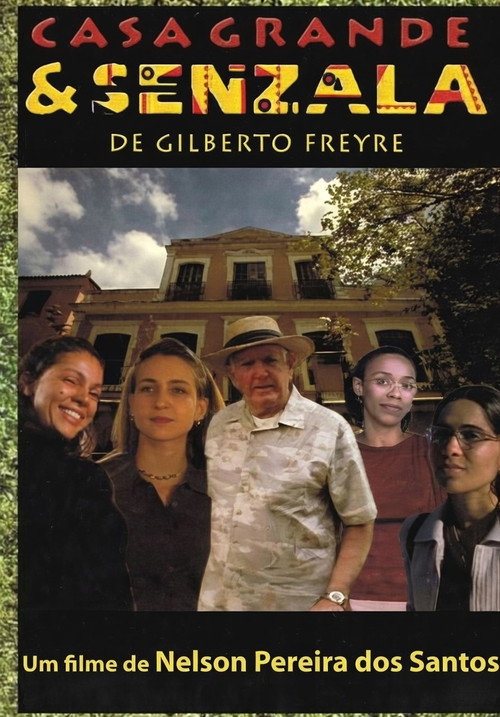
Casa Grande & Senzala 2001
Nelson Pereira dos Santos' *Casa Grande & Senzala* (2001) dives deep into the roots of Brazil's social fabric, tracing the legacy of Gilberto Freyre's seminal work on colonial-era power structures and cultural identity.
Director: Nelson Pereira dos Santos
Cast
Frequently Asked Questions
What is Casa Grande & Senzala (2001) about?
This documentary revisits Gilberto Freyre's influential theories on Brazil's colonial-era society, focusing on the dynamics between plantation elites and enslaved populations. It explores how these historical relationships continue to influence Brazil's social and cultural landscape today.
Who directed Casa Grande & Senzala?
Nelson Pereira dos Santos, a renowned Brazilian filmmaker known for his socially conscious cinema, directed this documentary.
Who stars in Casa Grande & Senzala?
The film features Gilberto Freyre as the central figure, alongside historian Edson Nery da Fonseca, whose insights frame the documentary's exploration of Freyre's work.
Is Casa Grande & Senzala (2001) worth watching?
As a documentary rooted in academic and cultural analysis, *Casa Grande & Senzala* offers a valuable perspective for those interested in Brazilian history and sociology. While not a mainstream narrative film, its depth and thematic richness make it a compelling watch for viewers seeking substance over spectacle.
How long is Casa Grande & Senzala?
The film runs for 224 minutes, offering an extensive yet immersive exploration of its themes.
About Casa Grande & Senzala (2001) — Nelson Pereira dos Santos' documentary on Brazil's colonial legacy and cultural identity
Nelson Pereira dos Santos' *Casa Grande & Senzala* (2001) dives deep into the roots of Brazil's social fabric, tracing the legacy of Gilberto Freyre's seminal work on colonial-era power structures and cultural identity. This documentary-style TV movie examines how the historic interplay between plantation elites and enslaved communities shaped modern Brazilian society, blending archival insights with reflective narration.
More than a historical recount, the film immerses viewers in a contemplative exploration of race, class, and heritage, all underpinned by Freyre's influential theories. Pereira dos Santos crafts a layered atmosphere—part academic discourse, part cinematic meditation—where the past is not just remembered but vividly re-examined through Freyre's lens and the voices that continue to echo his ideas.