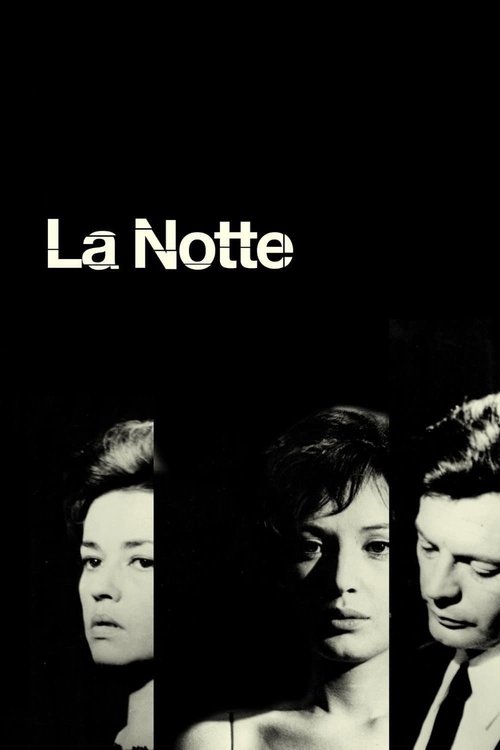
La Notte 1961
"A new genre of motion picture... to make you think and feel."
Michelangelo Antonioni's *La Notte (1961)* is a meditative exploration of love, time, and the quiet unraveling of a marriage.
Director: Michelangelo Antonioni
Cast
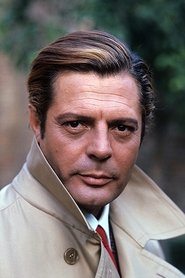
Marcello Mastroianni
Giovanni Pontano
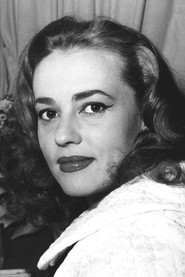
Jeanne Moreau
Lidia

Monica Vitti
Valentina Gherardini
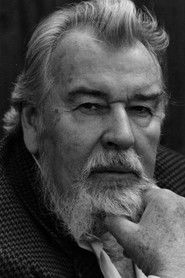
Bernhard Wicki
Tommaso Garani

Rosy Mazzacurati
Rosy
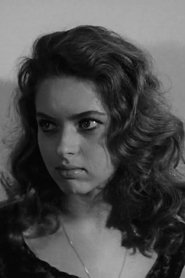
Maria Pia Luzi
Un'invitata
Guido A. Marsan
Fanti
Vittorio Bertolini
Vincenzo Corbella
Mr. Gherardini
Ugo Fortunati
Cesarino
Frequently Asked Questions
What is La Notte (1961) about?
*La Notte* follows a day in the life of Giovanni and Lidia, a married couple whose relationship is crumbling under the weight of infidelity and emotional detachment. Their journey through Milan's urban landscape becomes a metaphor for the disintegration of their bond, captured in Antonioni's signature style of quiet despair and existential observation.
Who directed La Notte?
Michelangelo Antonioni directed *La Notte*. Renowned for his visually striking and thematically dense films, Antonioni is celebrated as a pioneer of modernist cinema.
Who stars in La Notte?
The film stars Marcello Mastroianni as Giovanni, Jeanne Moreau as Lidia, and Monica Vitti in a pivotal supporting role, alongside Bernhard Wicki and Rosy Mazzacurati.
Is La Notte (1961) worth watching?
If you appreciate slow-burn dramas with profound themes and stunning visuals, *La Notte* is absolutely worth watching. While it's not a film for those seeking high-energy plots, its exploration of love and loneliness resonates deeply within the genre of 1960s European art cinema. Its cultural significance alone makes it a must-see for film enthusiasts.
How long is La Notte?
La Notte runs for 122 minutes, or approximately 2 hours and 2 minutes.
🎥 Trailer
La Notte (1961) — A Day in the Life of a Fractured Marriage
Michelangelo Antonioni's *La Notte (1961)* is a meditative exploration of love, time, and the quiet unraveling of a marriage. Set against the backdrop of Milan's bustling yet emotionally detached modernist landscape, the film follows a day in the life of Giovanni (Marcello Mastroianni), a writer whose disillusionment with his unfaithful wife Lidia (Jeanne Moreau) mirrors the existential drift of post-war Italy. As their strained relationship unfolds in cafes, hospitals, and parties, Antonioni crafts a visual symphony of alienation, using stark compositions and lingering silences to underscore the fragility of human connections. The movie's melancholic atmosphere lingers long after the credits roll, making it a masterclass in cinematic introspection.
A defining work of 1960s European art cinema, *La Notte (1961)* blends romance with raw realism, stripping away sentimentality to reveal the raw edges of modern love. With Monica Vitti's haunting presence adding depth to the narrative, Antonioni challenges viewers to confront the gaps between intention and feeling. The film's themes—isolation, the passage of time, and the search for meaning—resonate as powerfully today as they did six decades ago, cementing its status as a landmark in drama and cinema history.