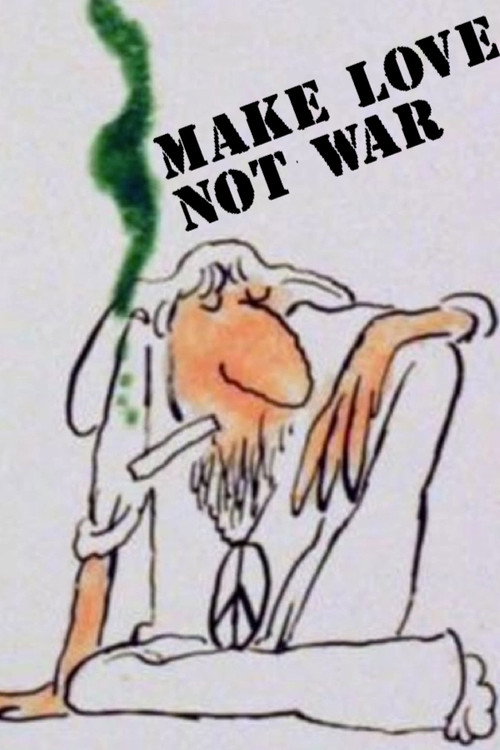
Make Love, Not War 1971
In the bold, socially charged landscape of early 1970s animation, Zlatko Grgić's *Make Love, Not War (1971)* delivers a provocative 60-second visual statement.
Director: Zlatko Grgić
Frequently Asked Questions
What is Make Love, Not War (1971) about?
The film follows a tender moment between a couple, only to reveal an unexpected third party—a policeman—who disrupts their connection. It's a brisk, symbolic critique of authority interfering in personal freedom.
Who directed Make Love, Not War?
Zlatko Grgić directed this short animation. Known for his innovative storytelling in Yugoslav and Canadian animation, Grgić crafted films that often carried social and political undertones.
Who stars in Make Love, Not War?
The cast details for *Make Love, Not War (1971)* are not publicly listed, as the film focuses more on visual storytelling than credited performers.
Is Make Love, Not War (1971) worth watching?
While it's an unrated, ultra-short film, its thematic boldness and historical context make it intriguing for animation and counterculture enthusiasts. Its 60-second runtime offers a quick but thought-provoking experience.
How long is Make Love, Not War?
*Make Love, Not War (1971)* runs for exactly 1 minute.
About Make Love, Not War (1971) — A 60-Second Animated Protest That Packs a Punch
In the bold, socially charged landscape of early 1970s animation, Zlatko Grgić's *Make Love, Not War (1971)* delivers a provocative 60-second visual statement. The film opens with an intimate, romantic moment between a couple locked in a passionate embrace, their silhouettes framed against a minimalist backdrop. But the idyllic scene is swiftly disrupted by an unexpected intrusion—a third figure, a stern policeman, stepping in to interject in the lovers' private affair. With sharp timing and symbolic simplicity, Grgić crafts a micro-narrative that critiques authority, repression, and the clash between personal freedom and institutional control.
At its core, *Make Love, Not War (1971)* mirrors the countercultural spirit of its era, using animation as a tool for social commentary rather than mere entertainment. The film's brevity belies its boldness, offering a satirical snapshot of a society grappling with peace, love, and resistance. Its stark visuals and abrupt resolution invite viewers to reflect on the tension between individual desire and societal norms—a theme that still resonates decades later.