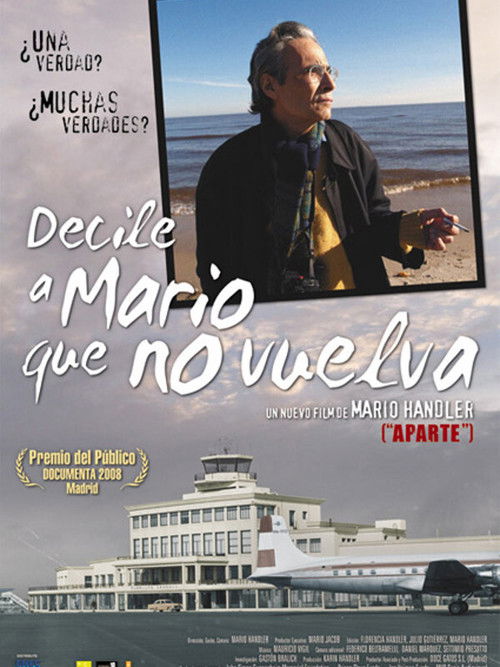
Tell Mario not to Come Back 2007
In *Tell Mario not to Come Back* (2007), Uruguayan filmmaker Mario Handler confronts his past as he returns to a country still haunted by dictatorship's lingering shadows.
Director: Mario Handler
Cast
Frequently Asked Questions
What is *Tell Mario not to Come Back* (2007) about?
The film follows director Mario Handler as he returns to Uruguay after years in exile, confronting a country still shaped by dictatorship. It's a meditation on memory, exile, and the debts owed to those who couldn't escape, blending poetry with the harsh realities of oppression.
Who directed *Tell Mario not to Come Back*?
The film was directed by Mario Handler, an Uruguayan filmmaker whose work often explores themes of exile and political repression.
Who stars in *Tell Mario not to Come Back*?
The documentary features key figures like Henry Engler, Adriana Villaverde, and Héctor Concari, alongside Fernando Frontán and Walter Berrutti.
Is *Tell Mario not to Come Back* (2007) worth watching?
As a documentary examining dictatorship and exile, it's a compelling watch for fans of political cinema. While not rated, its themes of conscience and justice make it a thought-provoking choice for audiences interested in Uruguayan history.
How long is *Tell Mario not to Come Back*?
The film runs for 82 minutes.
🎥 Trailer
About Tell Mario not to Come Back (2007) — A Uruguayan exile confronts dictatorship's lingering ghosts
In *Tell Mario not to Come Back* (2007), Uruguayan filmmaker Mario Handler confronts his past as he returns to a country still haunted by dictatorship's lingering shadows. The documentary blends sharp wit with poetic reflection, exploring exile, memory, and the unpaid debts of solidarity to those who endured oppression. Through Handler's lens, the film captures a nation wrestling with its history, where censorship lingers in media and public discourse. With black humor and unflinching conscience, it transforms personal reckoning into a stark portrait of resilience and unresolved justice.
Handler's journey unfolds against the backdrop of Uruguay's authoritarian legacy, where silence and repression shape everyday life. Featuring contributions from figures like Henry Engler and Adriana Villaverde, the film balances historical weight with intimate storytelling. As a documentary, it's both a personal memoir and a searing indictment of a society still grappling with its darkest chapters.