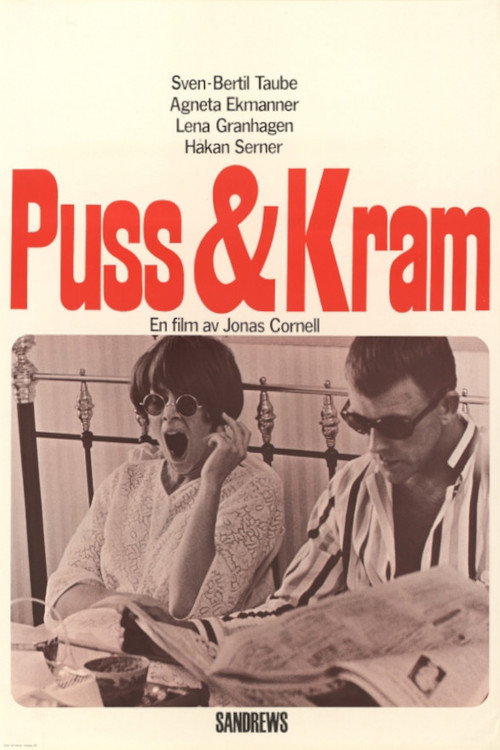
Hugs and Kisses 1967
Set in late 1960s Sweden, Jonas Cornell's dramedy *Hugs and Kisses (1967)* explores a marriage thrown into gentle chaos when Max's free-spirited old friend John unexpectedly moves in after a bitter breakup.
Director: Jonas Cornell
Cast




Frequently Asked Questions
What is Hugs and Kisses (1967) about?
This Swedish dramedy follows a married couple whose tranquil life is upended when Max's old friend John moves in after a painful breakup. As tensions rise and emotions intertwine, the trio's bond is tested by shifting loyalties and unspoken desires.
Who directed Hugs and Kisses?
Hugs and Kisses was directed by Jonas Cornell, a filmmaker known for blending sharp social commentary with intimate storytelling.
Who stars in Hugs and Kisses?
The film stars Sven-Bertil Taube as Max, Agneta Ekmanner as Eva, Håkan Serner as John, Lena Granhagen, and Ingrid Boström in key roles.
Is Hugs and Kisses (1967) worth watching?
Though unrated, *Hugs and Kisses* offers a thoughtful blend of comedy and drama that resonates with fans of character-driven films. Its themes of friendship and domesticity, paired with the charm of 1960s Sweden, make it a quietly rewarding watch for those seeking substance with subtlety.
How long is Hugs and Kisses?
The runtime of *Hugs and Kisses (1967)* is 94 minutes.
About Hugs and Kisses (1967) — A Swedish dramedy about love, disruption, and unexpected houseguests
Set in late 1960s Sweden, Jonas Cornell's dramedy *Hugs and Kisses (1967)* explores a marriage thrown into gentle chaos when Max's free-spirited old friend John unexpectedly moves in after a bitter breakup. What starts as a casual arrangement quickly spirals into a delicate dance of shifting loyalties, unspoken tensions, and affectionate friction as Eva grapples with Max's blurred boundaries and John's roguish charm. Blending wry humor with tender introspection, the film paints a vivid portrait of friendship tested, love rediscovered, and the quiet resilience of ordinary people navigating life's unexpected intrusions. With its sunlit Stockholm interiors and understated performances, the movie unfolds like a quietly observant snapshot of its era.
Audiences will find themselves charmed by the film's delicate balance of laughter and melancholy, where every hug is laced with a hint of a bite and every kiss carries the weight of possibility. The Swedish New Wave aesthetic shines through Cornell's direction, grounding the story in authentic moments rather than dramatic flourishes.