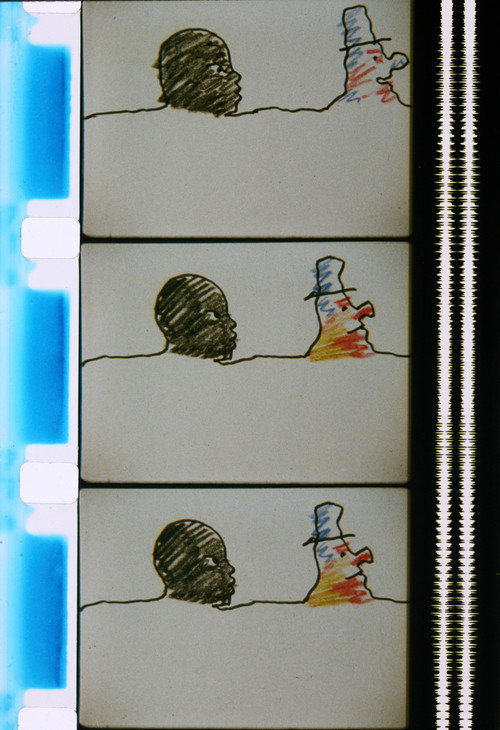
PBL #2 1968
Robert Breer's *PBL #2* (1968) delivers a striking, minute-long animated capsule of African American history, crafted as a commissioned short for Public Broadcast Laboratory and aired on the NET network.
Director: Robert Breer
Frequently Asked Questions
What is PBL #2 (1968) about?
*PBL #2* distills the Black American experience into a single, powerful minute of animation, tracing key historical milestones from struggle to resilience. Commissioned by Public Broadcast Laboratory, the film uses concise visual storytelling to highlight pivotal moments in African American history, all without a single word.
Who directed PBL #2?
The film was directed by Robert Breer, a pioneering experimental animator known for pushing the boundaries of visual storytelling in the 1960s and beyond.
Who stars in PBL #2?
Cast details for *PBL #2* are not publicly listed, as the film focuses entirely on animated representation rather than traditional actors.
Is PBL #2 (1968) worth watching?
While it's a niche experimental short with no IMDb rating, *PBL #2* is a fascinating time capsule for fans of political animation and Black history. Its bold visual approach and historical significance make it a rewarding watch for those curious about 1960s avant-garde cinema, even if it's not widely available today.
How long is PBL #2?
The film runs for exactly 1 minute.
About PBL #2 (1968) — A One-Minute Animated Masterpiece of Black History
Robert Breer's *PBL #2* (1968) delivers a striking, minute-long animated capsule of African American history, crafted as a commissioned short for Public Broadcast Laboratory and aired on the NET network. This experimental cartoon condenses decades of struggle, resilience, and cultural evolution into a visually dynamic narrative, blending abstract imagery with sharp social commentary. The film's brevity belies its impact—each frame pulses with urgency, mirroring the urgency of its historical subject. Rooted in animation, *PBL #2* merges artistry with activism, offering viewers a condensed yet evocative glimpse into pivotal moments that shaped Black identity.
With its stark visuals and thematic depth, the short transcends its brief runtime to become a poignant reflection on identity and progress. The absence of dialogue amplifies its power, relying on symbolic storytelling to convey emotion and context. While obscure by today's standards, *PBL #2* remains a fascinating artifact of 1960s experimental cinema, prized for its bold fusion of form and function.