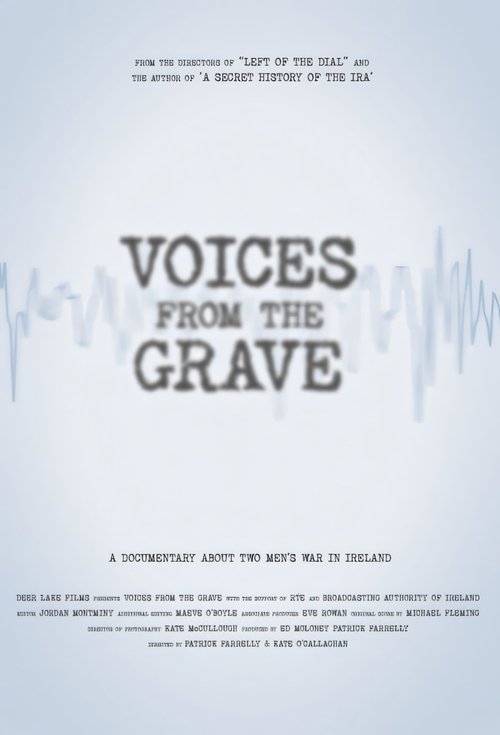
Voices from the Grave 2010
Voices from the Grave (2010) pulls back the curtain on the Northern Ireland Troubles through raw, never-before-heard accounts from two paramilitary leaders who shaped the conflict.
Director: Kate O'Callaghan
Frequently Asked Questions
What is Voices from the Grave (2010) about?
This documentary delves into the Northern Ireland Troubles through the personal testimonies of two paramilitary leaders—one from the IRA and one from the UVF—who recount their roles in the conflict. Their stories, told for the first time after nearly a decade of silence, reveal the motivations, strategies, and personal toll behind one of the 20th century's most divisive struggles.
Who directed Voices from the Grave?
Voices from the Grave was directed by Kate O'Callaghan, a filmmaker known for her work in documentary storytelling.
Who stars in Voices from the Grave?
The documentary features the testimonies of Brendan Hughes, an IRA commander, and David Ervine, a UVF leader, whose accounts form the core of the film.
Is Voices from the Grave (2010) worth watching?
Voices from the Grave is a compelling watch for anyone interested in the human side of historical conflicts. While it lacks an IMDb rating, its gripping narrative and rare insights into the Troubles make it a valuable documentary for history and film enthusiasts alike.
How long is Voices from the Grave?
The runtime of Voices from the Grave is 80 minutes.
About Voices from the Grave (2010) — The Troubles' darkest secrets, finally revealed
Voices from the Grave (2010) pulls back the curtain on the Northern Ireland Troubles through raw, never-before-heard accounts from two paramilitary leaders who shaped the conflict. Directed by Kate O'Callaghan, this gripping documentary stitches together the harrowing testimonies of Brendan Hughes, an IRA commander, and David Ervine, a UVF member, revealing the personal and political forces that drove decades of violence. Their unfiltered stories expose the humanity behind the headlines—the fear, the loyalty, and the moments of doubt that defined a generation torn apart by ideology and territory.
This isn't just a history lesson; it's a human drama where the past feels immediate, the stakes visceral, and the legacy haunting. O'Callaghan crafts an atmosphere of tension, using intimate interviews and archival footage to strip away the propaganda, allowing the voices of those who lived through the Troubles to take center stage.