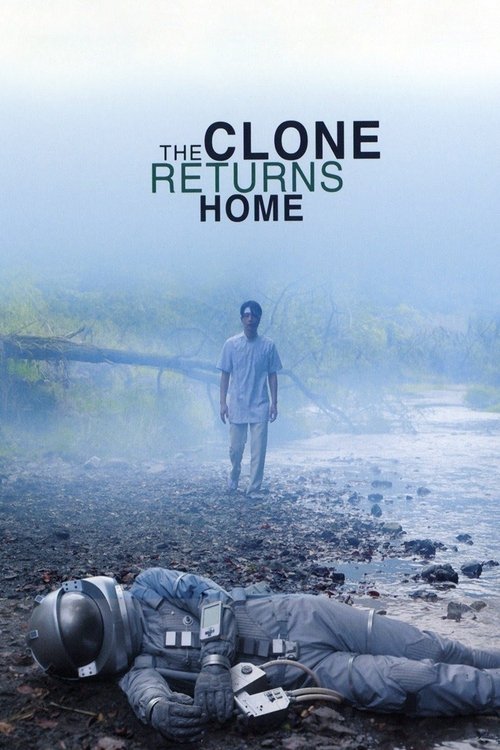
The Clone Returns Home 2008
"I must keep on living"
In Kanji Nakajima's haunting sci-fi drama *The Clone Returns Home* (2008), an astronaut's tragic fate is rewritten when his consciousness is resurrected as a clone—only to awaken memories of a childhood tragedy he can't escape.
Director: Kanji Nakajima
Cast








Frequently Asked Questions
What is The Clone Returns Home (2008) about?
The film follows Kohei Takahara, an astronaut whose consciousness is resurrected as a clone after his death in space. Struggling with fragmented memories of his past, Kohei discovers his own lifeless body and embarks on a journey to his hometown, haunted by the ghost of a tragedy he can't shake.
Who directed The Clone Returns Home?
Kanji Nakajima directed *The Clone Returns Home*. Known for his visually striking and thematically layered films, Nakajima crafts a slow-burning sci-fi drama that lingers in the mind.
Who stars in The Clone Returns Home?
The cast includes Hiromi Nagasaku as the resurrected Kohei, Mitsuhiro Oikawa as his twin brother, and Eri Shida in a key supporting role.
Is The Clone Returns Home (2008) worth watching?
While it's an underrated gem, *The Clone Returns Home* will appeal to fans of slow-burn sci-fi and emotional dramas. Its themes of identity and loss are compelling, though its pacing may not satisfy everyone seeking action or fast-paced storytelling.
How long is The Clone Returns Home?
The runtime is 110 minutes.
🎥 Trailer
The Clone Returns Home (2008): A Sci-Fi Drama of Memory and Loss — Full Movie Info
In Kanji Nakajima's haunting sci-fi drama *The Clone Returns Home* (2008), an astronaut's tragic fate is rewritten when his consciousness is resurrected as a clone—only to awaken memories of a childhood tragedy he can't escape. Hiromi Nagasaku and Mitsuhiro Oikawa deliver powerful performances as Kohei, the resurrected clone burdened by guilt, and his twin brother, whose sacrifice left deep scars. Blending science fiction with emotional depth, this film explores themes of identity, loss, and the inescapable weight of the past. The lush landscapes of Kohei's hometown contrast sharply with the loneliness of his existence, creating an atmosphere that lingers long after the credits roll.
As Kohei carries his own lifeless former body through the streets of his childhood home, the story unfolds like a somber reflection on what it means to live—especially when life itself is borrowed. Nakajima crafts a visually poetic and thematically rich narrative that questions the ethics of resurrection and the fragility of memory. With its striking cinematography and poignant storytelling, *The Clone Returns Home* (2008) stands out as a quietly devastating exploration of humanity's relationship with time and mortality.