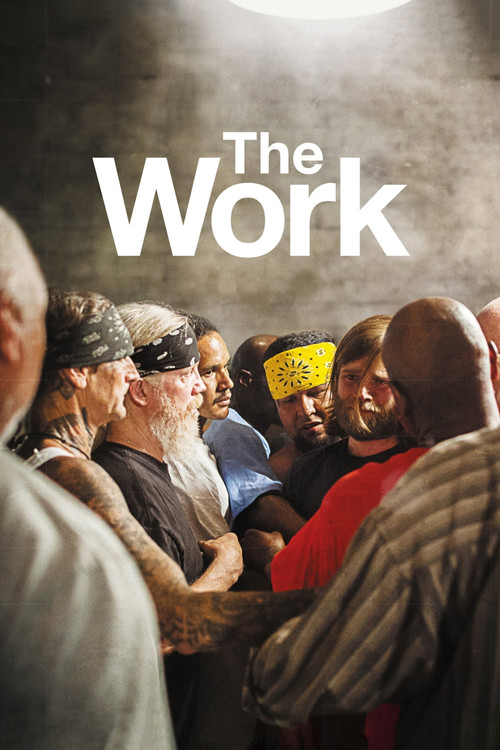
The Work 2017
"Sometimes change can only come from the inside."
Directed by Gethin Aldous, *The Work (2017)* immerses viewers inside Folsom Prison for an unfiltered, four-day group therapy session.
Director: Gethin Aldous
Frequently Asked Questions
What is The Work (2017) about?
*The Work* follows three outsiders as they join incarcerated men in a grueling four-day group therapy session inside Folsom Prison. Far from a traditional documentary, it captures unscripted moments of confrontation and catharsis that blur the line between victim and offender.
Who directed The Work?
Gethin Aldous directed *The Work*, bringing his observational documentary style to capture the prison's charged atmosphere.
Who stars in The Work?
The film features three main participants alongside the incarcerated men, with Gethin Aldous serving as the central observer behind the camera.
Is The Work (2017) worth watching?
As a documentary, *The Work* delivers unprecedented access and emotional depth, making it a must-watch for fans of raw, real-life storytelling. Its lack of rating shouldn't deter viewers—its power lies in its authenticity rather than critical accolades.
How long is The Work?
The Work runs for 90 minutes.
🎥 Trailer
About The Work (2017) — A raw prison therapy journey that redefines human transformation
Directed by Gethin Aldous, *The Work (2017)* immerses viewers inside Folsom Prison for an unfiltered, four-day group therapy session. The documentary spotlights three men as they confront their pasts alongside incarcerated participants, forging raw connections that challenge perceptions of guilt and redemption. Without Hollywood embellishment, the film strips away stereotypes to expose the fragile humanity beneath hardened exteriors—where vulnerability becomes the first step toward transformation.
Captured in intimate, vérité style, *The Work* strips away the noise of prison stereotypes to reveal the messy, hopeful reality of change. The cameras roll as walls crumble—literally and emotionally—during sessions that blur the line between prisoner and observer. With unflinching honesty, the film asks whether true rehabilitation starts not with policy or punishment, but with the courage to look inward.