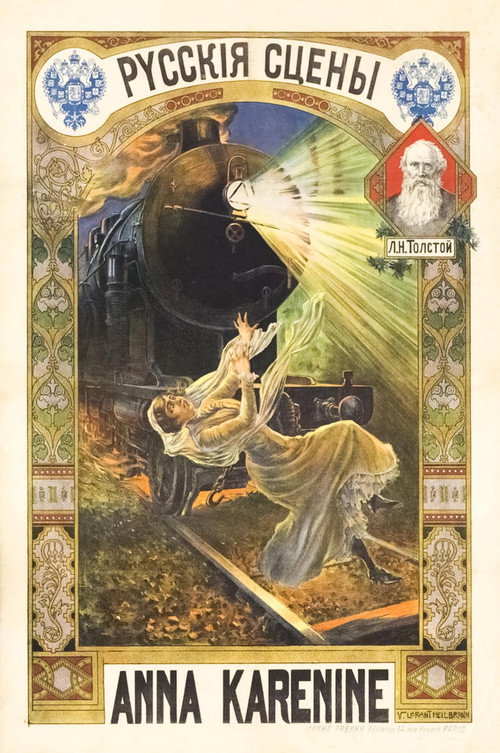
Anna Karenina 1911
One of cinema's earliest adaptations of Tolstoy's tragic masterpiece, the 1911 silent *Anna Karenina* transports viewers to Imperial Russia's glittering high society and shadowy moral codes.
Director: Maurice Maître
Cast
Frequently Asked Questions
What is Anna Karenina (1911) about?
This silent-era adaptation follows Anna Karenina, a respected officer's wife who risks everything after meeting the charismatic cavalry officer Vronsky on a journey to Moscow. Their burgeoning attraction quickly conflicts with the strict social expectations of Russia's aristocratic society, setting the stage for a heart-wrenching dilemma.
Who directed Anna Karenina?
The film was directed by Maurice Maître, an early silent-era filmmaker who brought Tolstoy's epic themes to the short-film format.
Who stars in Anna Karenina?
The cast features M. Sorokhtina and M. Trojanov in leading roles, supported by Nikolai Vasilyev, Z. Mamonova, and A. Veskov.
Is Anna Karenina (1911) worth watching?
Given its historical significance and condensed adaptation of a literary giant, *Anna Karenina (1911)* offers a unique time capsule for silent-film enthusiasts and Tolstoy fans. While its brevity limits depth, the film's early take on themes of love and societal pressure makes it a noteworthy watch for classic cinema collectors.
How long is Anna Karenina?
The film runs for approximately 9 minutes.
About Anna Karenina (1911) — The tragic romance that sparked cinema's first great love story
One of cinema's earliest adaptations of Tolstoy's tragic masterpiece, the 1911 silent *Anna Karenina* transports viewers to Imperial Russia's glittering high society and shadowy moral codes. Directed by Maurice Maître, this brief nine-minute drama follows Anna, a married officer's wife who travels to Moscow and finds herself irresistibly drawn to the dashing cavalry officer Vronsky. Their illicit attraction unfolds against the opulent ballrooms and rigid etiquette of St. Petersburg, where a single misstep could ruin a woman's standing forever. Shot in soft, flickering monochrome, the film distills the novel's emotional intensity into fleeting glances and restrained gestures, capturing both the era's grandeur and its stifling conventions.
Though stripped down to its narrative core, *Anna Karenina (1911)* preserves the timeless themes of love, duty, and social constraint that would later define subsequent adaptations. The atmosphere is one of restrained passion and looming consequence, where every glance between Anna and Vronsky carries the weight of scandal. With its concise runtime and early silent-era craftsmanship, this short film offers a fascinating glimpse into how silent cinema wrestled with classic literature from its very first years.