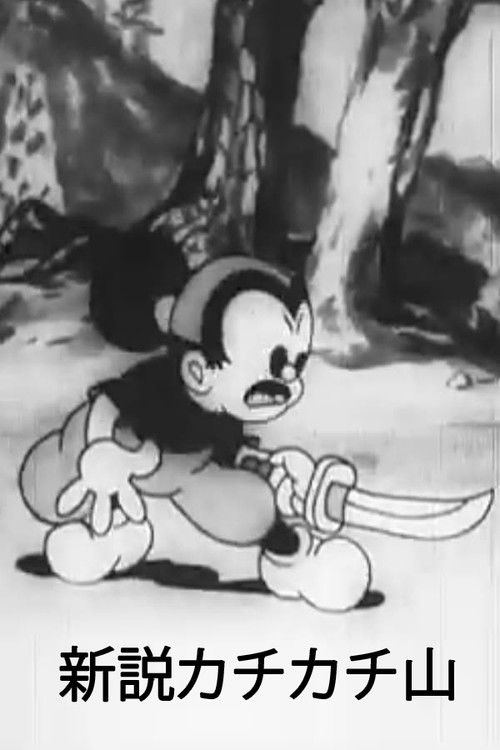
Shinsetsu Kachikachi Yama 1936
Step back to 1936 and meet one of Japan's earliest forays into hand-drawn animation—Shinsetsu Kachikachi Yama, a seven-minute short created by the young Kon Ichikawa.
Director: Kon Ichikawa
Frequently Asked Questions
What is Shinsetsu Kachikachi Yama (1936) about?
Set during a lively concert, the story follows a vengeful bandit who kidnaps an audience member mid-performance. A heroic conductor, modeled after the legendary Momotaro, leaps into action to bring the victim to safety.
Who directed Shinsetsu Kachikachi Yama?
The film was directed by Kon Ichikawa, who would later become one of Japan's most celebrated auteurs.
Who stars in Shinsetsu Kachikachi Yama?
The cast remains largely uncredited, but the charismatic hero is Dangonosuke, a conductor with Momotaro-like bravery.
Is Shinsetsu Kachikachi Yama (1936) worth watching?
As a historical curiosity and early experiment in Japanese animation, it offers charm and insight into Ichikawa's beginnings—though its seven-minute runtime means it's best enjoyed as a time capsule rather than a modern classic.
How long is Shinsetsu Kachikachi Yama?
The film runs for seven minutes.
About Shinsetsu Kachikachi Yama (1936) — Kon Ichikawa's earliest animation and its heroic rescue mission
Step back to 1936 and meet one of Japan's earliest forays into hand-drawn animation—Shinsetsu Kachikachi Yama, a seven-minute short created by the young Kon Ichikawa. Inspired by the lush, anthropomorphic worlds then popularized by Disney, the film follows a concert in full swing when an outraged bandit snatches an innocent concertgoer in retaliation for a past slight. Enter Dangonosuke, a heroic conductor whose Momotaro-like pluck and quick wits set the stage for a daring rescue. Beneath its playful surface, Ichikawa's work hints at themes of justice and camaraderie that would later define his storied career.
Though brief, Shinsetsu Kachikachi Yama captures a moment when Japanese animation was still finding its voice, blending Western technique with Eastern folktale energy. The lightning-fast chase across quirky scenery and the conductor's heroic silhouette give the film an energetic pulse that feels both timeless and distinctly ahead of its era.