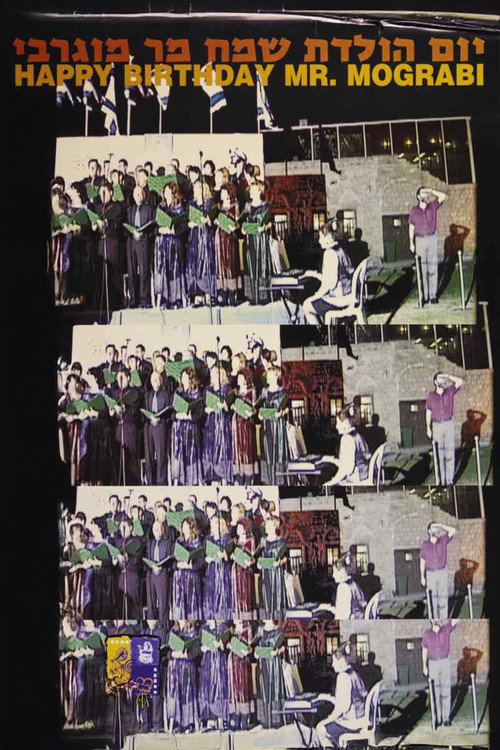
Happy Birthday, Mr. Mograbi 1999
Avi Mograbi's *Happy Birthday, Mr. Mograbi* (1999) is a cleverly layered documentary that unfolds like a cinematic puzzle.
Director: Avi Mograbi
Cast
Frequently Asked Questions
What is *Happy Birthday, Mr. Mograbi* (1999) about?
Director Avi Mograbi is hired to document Israel's 50th anniversary celebrations, but when unemployment rates spike, he's pulled into a secondary project—filming injustices to fuel reform. What follows is a playful yet profound exploration of documentary ethics and the role of film in political change.
Who directed *Happy Birthday, Mr. Mograbi*?
Avi Mograbi, the acclaimed Israeli filmmaker known for his politically charged documentaries and provocative storytelling style.
Who stars in *Happy Birthday, Mr. Mograbi*?
The documentary features Ido Berger, Gidi Dar, and Shahar Degal, along with real-life interviews and behind-the-scenes figures central to the unfolding narrative.
Is *Happy Birthday, Mr. Mograbi* (1999) worth watching?
As a documentary that critiques its own medium while tackling real-world issues, *Happy Birthday, Mr. Mograbi* offers both entertainment and enlightenment. Its sharp meta-commentary and timely themes make it a compelling watch for fans of political cinema, even decades after its release.
How long is *Happy Birthday, Mr. Mograbi*?
The film runs for 77 minutes, packing its social commentary and clever narrative twists into a concise runtime.
About Happy Birthday, Mr. Mograbi (1999) — Inside the filmmaker's dilemma between art and activism
Avi Mograbi's *Happy Birthday, Mr. Mograbi* (1999) is a cleverly layered documentary that unfolds like a cinematic puzzle. Hired to capture Israel's 50th anniversary celebrations, the director finds himself caught in a meta-narrative when economic realities collide with his commission. As unemployment rates surge into the headlines, the producer pivots toward activism—redirecting funds to build a factory. But with no experience in social change beyond filmmaking, Mograbi is tasked with documenting injustices instead, turning his camera toward systemic failures. The result is a sharp, self-aware reflection on art's power and limitations, blending humor with biting critique in a tone that's both intimate and incisive.
This 77-minute journey behind the scenes of a film within a film captures the tension between intention and outcome, where every frame feels charged with purpose. Mograbi's unflinching gaze exposes the absurdity and urgency of Israel's socio-political landscape in the late 1990s, all while questioning the role of the artist in times of crisis. The documentary's clever structure and candid interviews make it a standout in political cinema, offering viewers a rare glimpse into the making—and unmaking—of a project driven by conscience over spectacle.