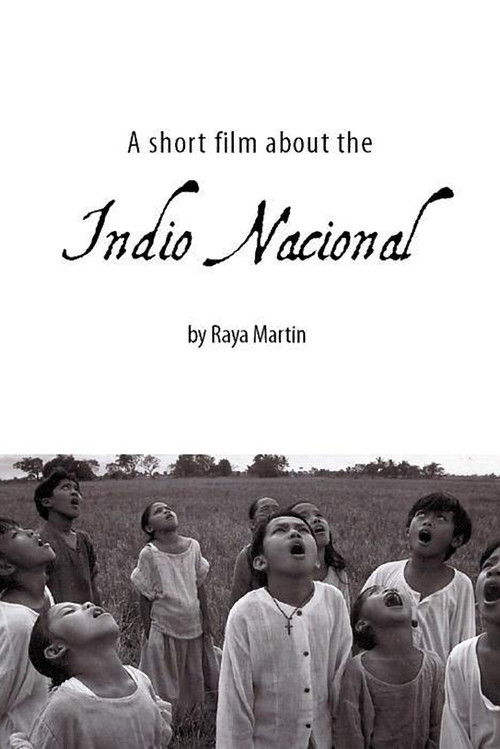
A Short Film About the Indio Nacional 2005
"(or the Prolonged Sorrow of the Filipinos)"
A Short Film About the Indio Nacional (2005), directed by Raya Martin, immerses viewers in the turbulent 1890s Philippines, capturing the spirit of resistance against Spanish colonial rule through a striking black-and-white silent lens.
Director: Raya Martin
Cast

Frequently Asked Questions
What is A Short Film About the Indio Nacional (2005) about?
This black-and-white silent film explores the life of a Filipino commoner during the 1890s, as he navigates the turbulent era of Spanish colonial rule. Through three pivotal stages of his life—childhood, youth, and adulthood—the story unfolds as a poignant allegory of resistance, identity, and the cost of revolution.
Who directed A Short Film About the Indio Nacional?
A Short Film About the Indio Nacional was directed by Raya Martin, a filmmaker known for his innovative and introspective approach to Philippine history and culture.
Who stars in A Short Film About the Indio Nacional?
The film features Lemuel Galman, Mark Joshua Maclang, Russell Ongkeko, Bodjie Pascua, and Suzette Velasco in key roles.
Is A Short Film About the Indio Nacional (2005) worth watching?
While it's a niche silent historical drama, its artistic vision and thematic depth make it compelling for viewers interested in Philippine history or silent cinema. However, its slow pace and lack of dialogue may not appeal to everyone.
How long is A Short Film About the Indio Nacional?
A Short Film About the Indio Nacional has a runtime of 97 minutes.
🎥 Trailer
About A Short Film About the Indio Nacional (2005) — Silent drama of Filipino revolution and identity
A Short Film About the Indio Nacional (2005), directed by Raya Martin, immerses viewers in the turbulent 1890s Philippines, capturing the spirit of resistance against Spanish colonial rule through a striking black-and-white silent lens. The narrative unfolds as a layered allegory of Filipino identity, tracing the life of an "Indio"—a common man—from his youth as a church bell ringer to his radicalization as a teenage revolutionary fighting for freedom. The film blends tragic and comedic tones, mirroring the absurdity and harshness of colonial oppression while paying homage to the resilience of ordinary Filipinos. With its evocative visuals and historical depth, this 97-minute drama transcends time, offering a poignant reflection on nationhood and the cost of revolution.
Martin's vision transforms the screen into a canvas of contrasts, juxtaposing the innocence of childhood against the weight of history. The Indio's journey culminates in adulthood as he takes on a role in a Spanish play, a metaphor for the performative nature of colonial narratives and the reclaiming of cultural identity. This silent yet powerful film resonates with themes of struggle, identity, and the enduring quest for self-determination, making it a unique entry in Philippine cinema that challenges and captivates in equal measure.