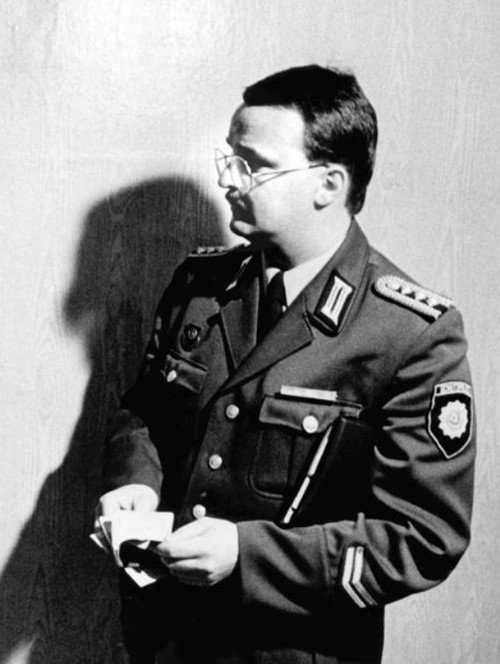
The People's Police Force, 1985 1985
In *The People's Police Force, 1985 (1985)*, director Thomas Heise crafts a raw and intimate portrait of East Berlin's everyday life under the watchful eye of the state.
Director: Thomas Heise
Frequently Asked Questions
What is *The People's Police Force, 1985 (1985)* about?
This documentary by Thomas Heise offers an unfiltered look at the daily operations of the East German police force in Berlin Mitte. It captures the quiet, relentless presence of authority and the ways it shapes ordinary life under state surveillance.
Who directed *The People's Police Force, 1985*?
The film was directed by Thomas Heise, a German filmmaker known for his observational documentaries that delve into historical and social themes.
Who stars in *The People's Police Force, 1985*?
Cast details are not listed, as this is a documentary focusing on institutional figures rather than individual stars.
Is *The People's Police Force, 1985 (1985)* worth watching?
As a documentary, its strength lies in its authenticity and historical insight. While it may not suit those seeking dramatic storytelling, it's a compelling watch for viewers interested in Cold War-era Europe or documentary filmmaking at its most unvarnished.
How long is *The People's Police Force, 1985*?
The film runs for 60 minutes.
The People's Police Force, 1985 (1985) — A Grounded Look at East Berlin's Surveillance State
In *The People's Police Force, 1985 (1985)*, director Thomas Heise crafts a raw and intimate portrait of East Berlin's everyday life under the watchful eye of the state. Through his lens, the documentary captures the quiet tensions and unspoken routines of the *Volkspolizei*—the People's Police—navigating the streets of Berlin Mitte. Shot in stark black-and-white, the film immerses viewers in a world where duty and surveillance blend seamlessly with ordinary existence, offering a glimpse into a society where authority permeates even the most mundane moments. Heise's unflinching gaze strips away glamour, revealing a system where the personal is political, and every interaction carries weight.
The atmosphere is tense yet understated, as Heise avoids sensationalism in favor of observational authenticity. The documentary's power lies in its simplicity: it doesn't dramatize or glorify, but instead lets the reality of life in East Germany speak for itself. With a runtime of just 60 minutes, *The People's Police Force, 1985* is a compact yet profound study of power, control, and the human experience behind the iron curtain.