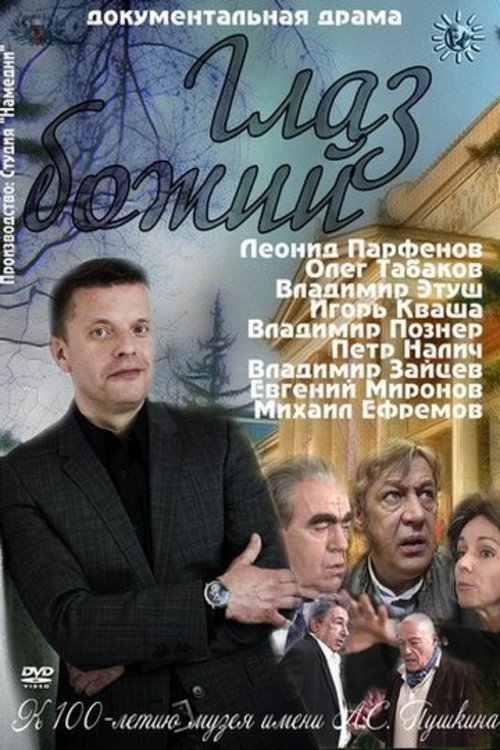
Eye of God 2012
Eye of God (2012), directed by Sergey Nurmamed, is a profound documentary-drama that celebrates the 100th anniversary of Moscow's iconic Pushkin Museum.
Director: Sergey Nurmamed
Cast









Frequently Asked Questions
What is Eye of God (2012) about?
Eye of God (2012) delves into the creation of the Pushkin Museum, a landmark celebrating its 100th anniversary. The documentary follows Ivan Tsvetayev, the museum's founder, as he champions art's role in bridging cultural divides and asserting Russia's place in Europe's shared heritage. It's a tribute to how beauty and history can redefine national identity.
Who directed Eye of God?
Sergey Nurmamed directed Eye of God (2012), crafting a visually rich documentary that blends history with contemporary reflections.
Who stars in Eye of God?
The film features narration by Leonid Parfyonov, Oleg Tabakov, Vladimir Etush, Igor Kvasha, and Vladimir Pozner, alongside musician Peter Nalitch.
Is Eye of God (2012) worth watching?
For documentary enthusiasts, Eye of God (2012) is a compelling watch, especially if you appreciate art history or cultural narratives. Its 150-minute runtime allows for a thorough exploration of its themes, though its pacing may vary depending on your interest in the subject matter.
How long is Eye of God?
Eye of God (2012) runs for 150 minutes, offering an in-depth look at its central themes.
About Eye of God (2012) — The Pushkin Museum's Centennial Story of Art and Identity
Eye of God (2012), directed by Sergey Nurmamed, is a profound documentary-drama that celebrates the 100th anniversary of Moscow's iconic Pushkin Museum. Through the lens of Ivan Tsvetayev—a visionary and son of a village priest—the film explores how art transcends borders, proving that beauty and culture unite Europe and antiquity as shared foundations. Narrated by esteemed voices like Leonid Parfyonov and Oleg Tabakov, the documentary weaves history with human ambition, capturing the spirit of a man determined to shape 'new Ivans' who see their heritage as inseparable from Western ideals. The atmosphere is both reflective and inspiring, blending archival footage with philosophical musings on art's power to define identity.
At its core, Eye of God (2012) challenges viewers to reconsider their relationship with art history, urging a deeper connection to the past while embracing a broader, more inclusive vision of beauty. The film's themes of progress, cultural identity, and the universal language of art resonate powerfully, making it a must-watch for history buffs, art enthusiasts, and anyone curious about the forces that shape our world.