Geldsorgen 1975
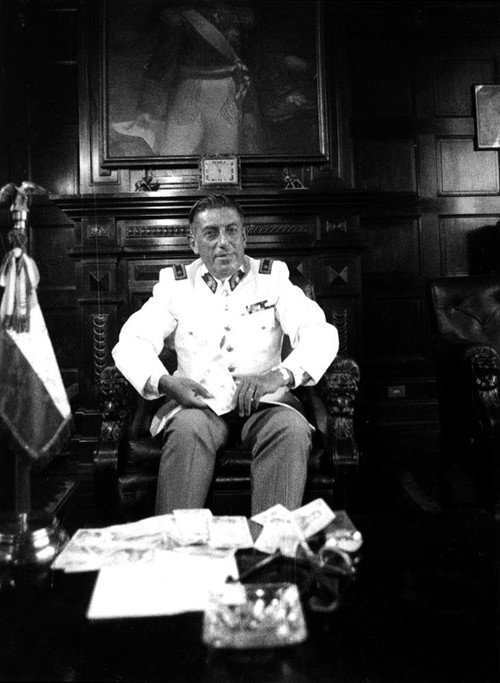
Step into the chilling political landscape of 1975 with *Geldsorgen*, Walter Heynowski's razor-sharp short documentary. The film casts a penetrating light on General Eduardo Cano, who ascended to lead Chile's central bank in the aftermath of Pinochet's military coup.
Director: Walter Heynowski
Cast
Frequently Asked Questions
What is Geldsorgen (1975) about?
*Geldsorgen* examines General Eduardo Cano's tenure as director of Chile's central bank following Pinochet's coup. It reveals how Cano's withdrawal of certain banknotes—linked to opposition resistance—became a tool of financial suppression. The film captures a brief but pivotal moment in Chile's authoritarian history.
Who directed Geldsorgen?
The film was directed by Walter Heynowski, a noted documentarian known for his politically charged films during the Cold War era.
Who stars in Geldsorgen?
The documentary features Gerhard Scheumann as a key collaborator, alongside historical figures like Augusto Pinochet in the context of the era.
Is Geldsorgen (1975) worth watching?
*Geldsorgen* offers a concise but potent glimpse into Chile's political economy under Pinochet. As a short documentary from an acclaimed director, it's ideal for history and political film enthusiasts—though its unrated status reflects its niche appeal rather than quality.
How long is Geldsorgen?
The runtime is approximately 6 minutes.
About Geldsorgen (1975) — A 6-Minute Look at Money, Power, and Dictatorship in Chile
Step into the chilling political landscape of 1975 with *Geldsorgen*, Walter Heynowski's razor-sharp short documentary. The film casts a penetrating light on General Eduardo Cano, who ascended to lead Chile's central bank in the aftermath of Pinochet's military coup. As Cano withdraws currency tied to resistance movements—dubbed 'piles of resistance' by opposition voices—this compact 6-minute critique exposes the financial machinery fueling authoritarian control. Heynowski's signature documentary style weaves tension and urgency into every frame, transforming a brief runtime into a stark exploration of power, economics, and oppression.
As part of the provocative *Chile cycle*, *Geldsorgen* stands alongside the work of Heynowski and co-director Gerhard Scheumann, whose collaborations dissect Cold War-era geopolitics with unflinching precision. The film's atmosphere is thick with implication—less a story, more a forensic glimpse into how money and dictatorship intertwine. For viewers eager to uncover the hidden mechanics of political control, this is a compact but unforgettable piece of cinematic history.