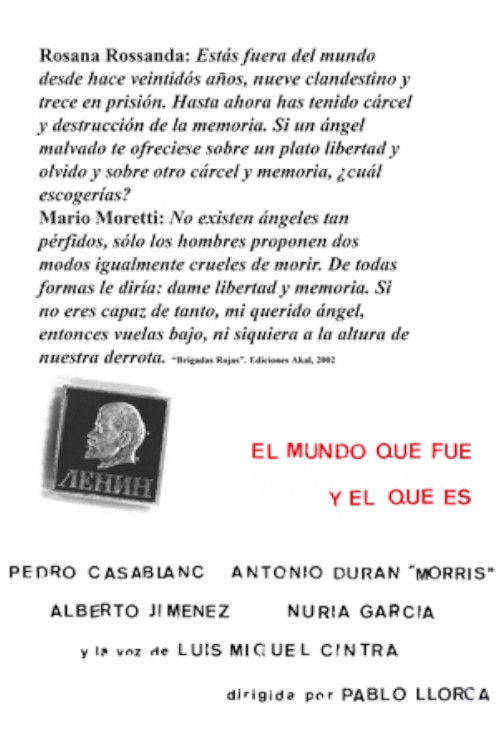
The world that was (and that is) 2011
Pablo Llorca's *The world that was (and that is)* (2011) is a poignant drama that revisits Spain's fleeting socialist era, capturing its ideals and contradictions through a lens of quiet nostalgia.
Director: Pablo Llorca
Cast






Frequently Asked Questions
What is *The world that was (and that is)* (2011) about?
The film examines Spain's brief flirtation with socialism through the lives of individuals who lived through its rise and fall. It's a story of ideals tested by reality, where personal dreams intersect with the turbulent currents of history.
Who directed *The world that was (and that is)*?
Pablo Llorca, known for his thoughtful and introspective approach to historical narratives.
Who stars in *The world that was (and that is)*?
The film features a cast including Enrique Berrendero, Luis Miguel Cintra, Antonio Durán 'Morris', Pedro Casablanc, and Jorge Ferrer.
Is *The world that was (and that is)* (2011) worth watching?
Though unrated on IMDb, the film's thoughtful exploration of historical themes and strong ensemble cast make it a solid choice for fans of reflective Spanish dramas. Its slow-burn pacing rewards patience with a rich, atmospheric experience.
How long is *The world that was (and that is)*?
The film has a runtime of 97 minutes.
About The world that was (and that is) (2011) — A reflective drama on Spain's socialist past
Pablo Llorca's *The world that was (and that is)* (2011) is a poignant drama that revisits Spain's fleeting socialist era, capturing its ideals and contradictions through a lens of quiet nostalgia. The film weaves together personal and political threads, following characters whose lives were shaped by an ideology that burned bright but faded quickly. With a somber tone and deliberate pacing, Llorca crafts a meditation on memory, legacy, and the fragility of change, set against a backdrop of historical upheaval. Enrique Berrendero, Luis Miguel Cintra, and Antonio Durán 'Morris' lead the ensemble, delivering performances that anchor the film's emotional depth.
Set in a time of transition, the movie explores the tension between hope and disillusionment as it chronicles the collapse of a movement that once promised transformation. The storytelling balances intimate character arcs with broader social commentary, making it a compelling watch for those intrigued by Spain's modern political history. The film's restrained cinematography and understated performances amplify its themes, offering a haunting reflection on what was—and what remains—of that pivotal era.