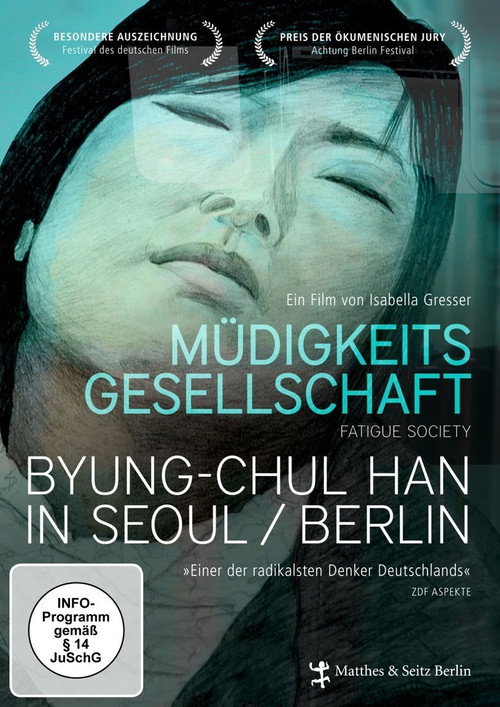
Müdigkeitsgesellschaft: Byung-Chul Han in Seoul/Berlin 2015
Directed by Isabella Gresser, this 2015 documentary essay film *Müdigkeitsgesellschaft: Byung-Chul Han in Seoul/Berlin* dives into the modern epidemic of fatigue gripping capitalistic societies.
Director: Isabella Gresser
Cast

Frequently Asked Questions
What is Müdigkeitsgesellschaft: Byung-Chul Han in Seoul/Berlin (2015) about?
This documentary examines the crushing pressure of modern achievement culture through the philosophy of Byung-Chul Han. It explores how constant self-optimization fuels societal fatigue, burnout, and depression, questioning whether we're living authentically in a digital world obsessed with productivity.
Who directed Müdigkeitsgesellschaft: Byung-Chul Han in Seoul/Berlin?
Isabella Gresser helmed this documentary, weaving Han's philosophical insights with striking visual contrasts between Seoul and Berlin.
Who stars in Müdigkeitsgesellschaft: Byung-Chul Han in Seoul/Berlin?
The film features philosopher Byung-Chul Han alongside acclaimed director Park Chan-wook, with Gresser guiding the narrative through her directorial lens.
Is Müdigkeitsgesellschaft: Byung-Chul Han in Seoul/Berlin (2015) worth watching?
Though unrated on IMDb, this 61-minute documentary offers a sharp, accessible critique of modern burnout that resonates with today's work-obsessed culture. Fans of philosophical documentaries or Han's theories will find it compelling, while its concise runtime makes it a perfect watch for curious minds.
How long is Müdigkeitsgesellschaft: Byung-Chul Han in Seoul/Berlin?
The runtime is 61 minutes.
About Müdigkeitsgesellschaft: Byung-Chul Han in Seoul/Berlin (2015) — A provocative doc dissecting modern burnout
Directed by Isabella Gresser, this 2015 documentary essay film *Müdigkeitsgesellschaft: Byung-Chul Han in Seoul/Berlin* dives into the modern epidemic of fatigue gripping capitalistic societies. Through the lens of philosopher Byung-Chul Han's provocative ideas, the film explores the exhaustion, burnout, and depression fueled by an achievement-obsessed digital culture. Blending Han's insights with striking visuals between Seoul and Berlin, it challenges viewers to reconsider how we navigate productivity pressures in today's hyper-connected world.
Gresser's documentary captures the paradox of modern life—where constant self-optimization leads not to fulfillment but to emotional burnout. By examining societal burnout through Han's critical framework, the film transforms abstract academic theory into a visceral exploration of contemporary alienation. It's a thought-provoking meditation on resistance, asking what alternatives exist beyond the relentless grind of work and performance.