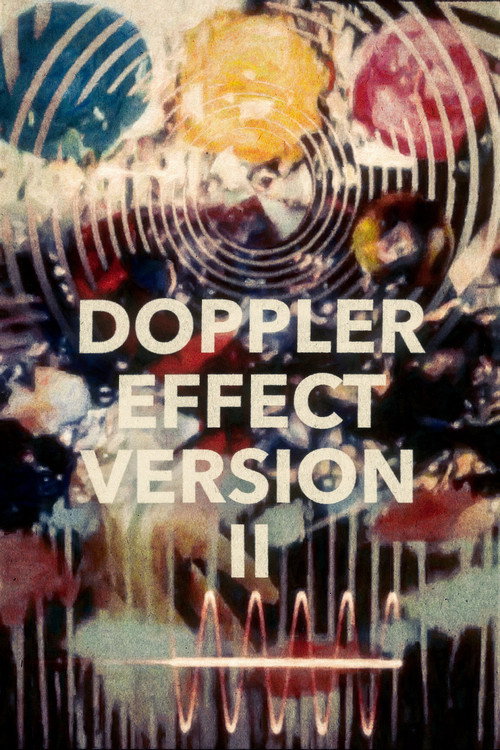
Doppler Effect Version II 1969
Doppler Effect Version II (1969), directed by Dan Agnew, pushes the boundaries of experimental filmmaking by weaving together disparate stock footage—political broadcasts, wildlife scenes, urban landscapes, and abstract imagery—into a rhythmic, time-based collage.
Director: Dan Agnew
Frequently Asked Questions
What is Doppler Effect Version II (1969) about?
The film is a rhythmic, time-based experiment that merges diverse stock footage—political speeches, animal life, urban scenes, and abstract light patterns—into a formal exercise. Directed by Dan Agnew, it strips away traditional storytelling to focus solely on the interplay of image sequences and intervals.
Who directed Doppler Effect Version II?
Dan Agnew directed Doppler Effect Version II. Known for his avant-garde approach, Agnew crafted this five-minute short as a sequel to his 1967 experiment, pushing the boundaries of found footage filmmaking.
Who stars in Doppler Effect Version II?
Director information is not available.
Is Doppler Effect Version II (1969) worth watching?
As a five-minute experimental short, Doppler Effect Version II offers a unique viewing experience for fans of avant-garde cinema or rhythmic visual compositions. While it lacks traditional narrative, its technical precision and hypnotic pacing make it a compelling watch for those curious about experimental filmmaking techniques.
How long is Doppler Effect Version II?
Doppler Effect Version II runs for 5 minutes.
About Doppler Effect Version II (1969) — A Five-Minute Experimental Masterpiece of Rhythm and Found Footage
Doppler Effect Version II (1969), directed by Dan Agnew, pushes the boundaries of experimental filmmaking by weaving together disparate stock footage—political broadcasts, wildlife scenes, urban landscapes, and abstract imagery—into a rhythmic, time-based collage. Abandoning narrative or thematic cohesion, the five-minute short embraces pure formalism, using precise intervals and micro-montages to explore the interplay of sound, motion, and chance. The result is a hypnotic, almost meditative experience that challenges viewers to find meaning in the interplay of images, or simply to surrender to the visual cadence.
Agnew's follow-up to his 1967 experiment refines his technique, blending found footage of pornographic and documentary sources with his own stark cityscapes and light studies. The film's refusal to anchor its imagery in context creates an unsettling yet mesmerizing atmosphere, where the act of cutting becomes the primary language. Doppler Effect Version II invites audiences into a world where time is both the medium and the message.