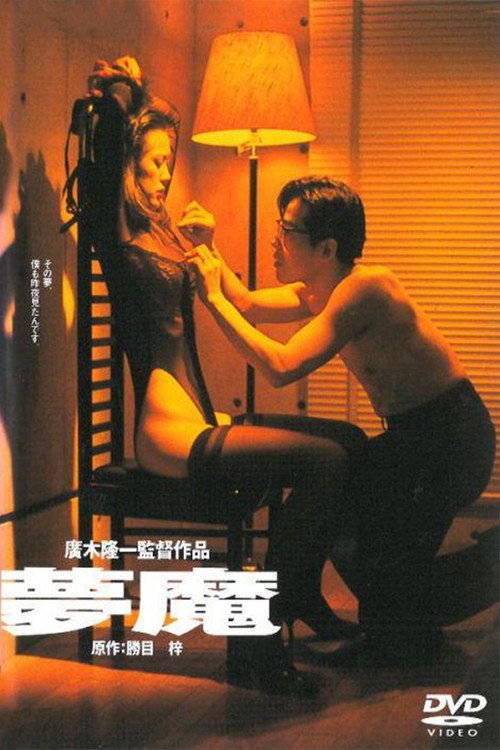
Evil Dream 1994
In the intimate and unsettling world of *Evil Dream (1994)*, directed by Ryuichi Hiroki, a bus driver's subconscious becomes entangled with the fantasies of a passenger he encounters daily.
Director: Ryuichi Hiroki
Cast






Frequently Asked Questions
What is Evil Dream (1994) about?
The film follows a bus driver and a passenger whose dreams intertwine in a disturbing and intimate exchange. Their shared fantasies blur the line between reality and subconscious longing, creating a tense exploration of desire and secrecy.
Who directed Evil Dream?
Ryuichi Hiroki directed *Evil Dream*, known for his work in Japanese drama and psychological storytelling.
Who stars in Evil Dream?
The film features Tomorowo Taguchi as Yukihiko and Rinko Mayumi as Noriko, with supporting roles from Shungicu Uchida, Yuka Ônishi, and Zenkichi Yoneyama.
Is Evil Dream (1994) worth watching?
While *Evil Dream* isn't widely rated, its atmospheric storytelling and Ryuichi Hiroki's direction make it a compelling watch for fans of psychological dramas. The film's unconventional premise and moody tone set it apart, though it may not appeal to all viewers due to its bold themes.
How long is Evil Dream?
The film runs for 87 minutes.
About Evil Dream (1994) — A Psychological Drama of Shared Fantasies and Hidden Desires
In the intimate and unsettling world of *Evil Dream (1994)*, directed by Ryuichi Hiroki, a bus driver's subconscious becomes entangled with the fantasies of a passenger he encounters daily. Nakatsuka Yukihiko's dreams spiral into a shared erotic reverie with Noriko Otomo, blurring the lines between desire and reality. Hiroki crafts a moody, introspective drama that explores the hidden tensions beneath everyday interactions, wrapping the story in a haze of psychological unease and forbidden longing.
Starring Tomorowo Taguchi and Rinko Mayumi, the film dives deep into themes of obsession and the unspoken desires that lurk beneath polite society. At just 87 minutes, *Evil Dream* unfolds like a feverish daydream, where the boundaries of consent and fantasy dissolve into a hauntingly ambiguous narrative. With its stark visuals and subdued tension, Hiroki's film lingers like a half-remembered nightmare, leaving viewers to question what's real—and what's just another layer of the dream.